
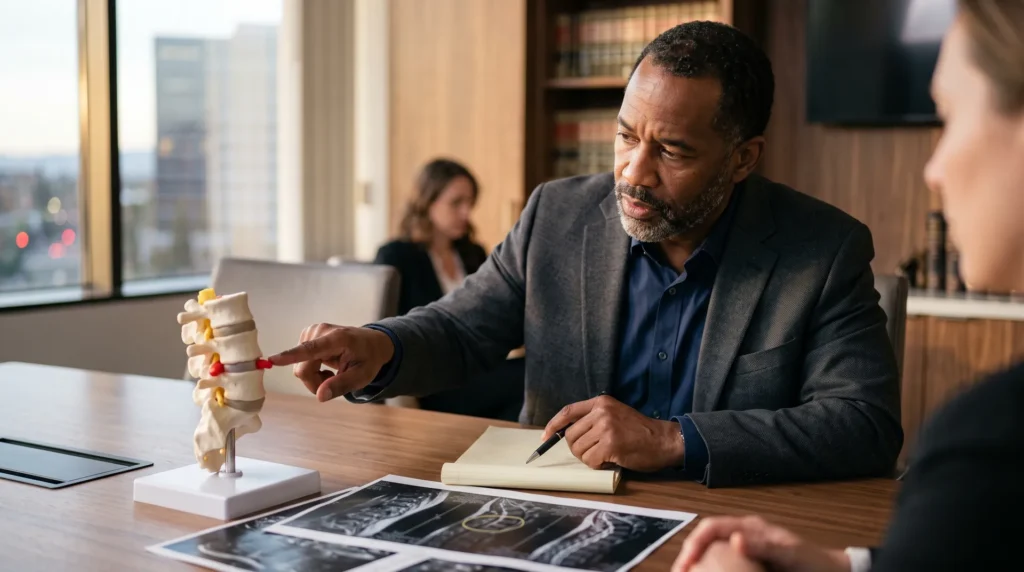
After a serious car crash or other traumatic event in California, an injured person may hear broad terms such as “back injury” or “spinal injury.” Legally, however, those descriptions reveal very little about what the injury could mean for the person’s future.
A herniated disc and a spinal cord injury can both result from significant trauma, but they affect the body differently and can create very different medical, financial, and personal consequences. For someone pursuing a personal injury claim in San Jose or elsewhere in Santa Clara County, understanding that distinction is important because compensation should reflect the actual injury and its long-term effects.
A Herniated Disc Affects the Spine Differently
The spine contains discs that provide cushioning between the vertebrae. Trauma from a collision can damage a disc, causing its inner material to push through the outer layer. Depending on where the herniation occurs and whether it places pressure on nearby nerves, symptoms can include pain, numbness, tingling, weakness, or pain radiating into an arm or leg.
Treatment can vary considerably. Some people improve with rest, medication, physical therapy, injections, or other conservative care. Others experience persistent symptoms and may eventually require surgery.
That range matters in a personal injury case. A diagnosis alone does not establish how seriously a herniated disc has affected someone. Medical records may need to show the location and severity of the injury, the symptoms it produces, the treatment required, and whether limitations are expected to continue.
Spinal Cord Damage Can Have Far More Extensive Consequences
A spinal cord injury involves damage to the bundle of nerves responsible for transmitting signals between the brain and the rest of the body. Depending on the location and severity of the damage, the consequences may include loss of sensation, impaired movement, weakness, or paralysis.
These injuries may also affect functions far beyond mobility. A serious spinal cord injury can create lifelong medical and personal needs involving rehabilitation, assistive equipment, home modifications, attendant care, and ongoing treatment.
For an injured person and their family, the financial impact can therefore extend decades into the future.
Why the Medical Distinction Changes the Legal Evaluation
Personal injury claims are not valued simply by assigning a dollar amount to a particular diagnosis. The larger question is what that injury has taken from the individual and what it is reasonably expected to cost in the future.
For example, someone with a herniated disc may be unable to perform physical work for months, require surgery, and continue experiencing chronic pain. Another person with spinal cord damage may permanently lose the ability to return to their occupation or live independently.
Depending on the circumstances, a claim involving either injury may need to account for:
- Past and future medical treatment.
- Rehabilitation and physical therapy.
- Lost wages.
- Reduced future earning capacity.
- Pain and physical limitations.
- Assistance with daily activities.
- Future medical equipment or accessibility needs.
The appropriate damages depend on the specific injury rather than the general fact that someone hurt their back or spine.
Future Medical Needs Can Become a Major Point of Dispute
Insurance companies may focus heavily on treatment that has already occurred. With serious spinal injuries, however, past medical bills can represent only part of the financial picture.
Physicians and other specialists may need to assess whether an injured person is likely to require additional surgery, ongoing rehabilitation, pain management, mobility equipment, or other future care.
Employment can be another significant consideration in Silicon Valley. A spinal injury does not have to prevent someone from working entirely to affect earning capacity. Chronic pain, difficulty sitting for extended periods, reduced mobility, medication side effects, or the need for frequent medical care can interfere with careers that once seemed physically undemanding.
Documenting these long-term effects can be critical when an insurer challenges the extent or value of a claim.
The Diagnosis Is Only the Beginning
Two spinal injury claims can look similar on paper while having entirely different consequences for the people living with them. That is why evaluating these cases requires more than identifying an MRI finding or reviewing the first round of medical bills.
Solution Now Law Firm examines how a spinal injury affects the injured person now and what medical evidence indicates about the future. That may include reviewing treatment records, anticipated medical needs, employment consequences, and the ways an injury has changed everyday life.
If you suffered a herniated disc, spinal cord injury, or other serious spinal injury because of someone else’s negligence in San Jose or elsewhere in Santa Clara County, call Solution Now Law Firm at (510) 983-4208 or contact the firm online for a free consultation. Understanding the full extent of the injury is essential to pursuing compensation that reflects its true impact.