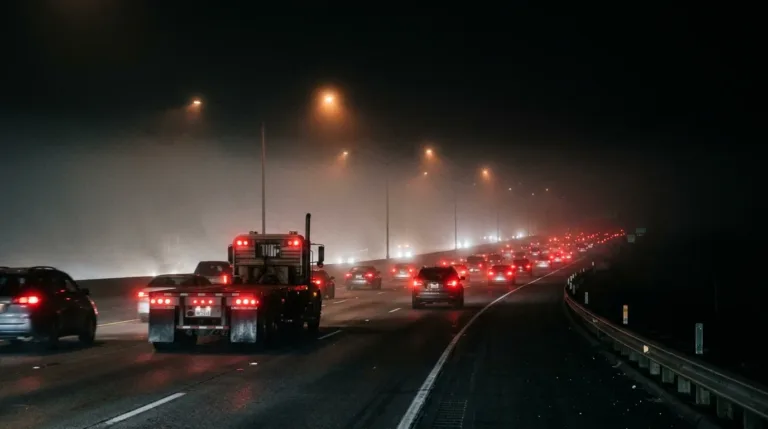
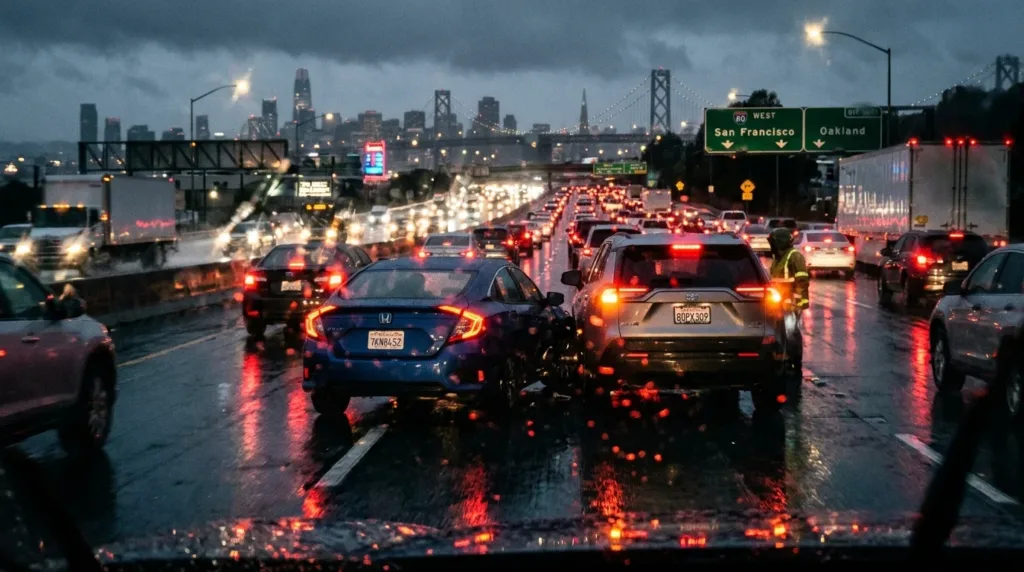
When the first major rains hit the Bay Area, the risk of car accidents skyrockets due to months of accumulated oil and grease rising to the road surface. This creates a highly slick, dangerous layer that severely reduces tire traction and leads to hydroplaning. Drivers who fail to adjust their speed to these hazardous conditions frequently cause severe rear-end collisions and multi-vehicle pileups.
Key takeaways
- Months of dry weather cause oil and grease to build up on Bay Area roads.
- The first rain lifts these oils to the surface, creating extremely slick and hazardous driving conditions.
- Drivers must reduce speed in the rain; failing to do so constitutes negligence under California law.
- Insurance adjusters often unfairly blame the weather to devalue legitimate injury claims.
- The Hidden Dangers of the First Rain and Car Accidents
- How Oil Buildup Creates Slick Highway Conditions
- Common Causes of Wet-Weather Collisions in San Jose
- Dealing with Insurance Adjusters After a Storm-Related Crash
- Protecting Your Rights and Seeking Fair Compensation
- Frequently asked questions
The Hidden Dangers of the First Rain and Car Accidents
As the long, dry California summer transitions into fall, the anticipation of rain brings relief to many. Unfortunately, it also brings a severe spike in traffic hazards. The window of greatest danger typically spans the first 10 to 20 minutes after rainfall begins. During this brief period, the combination of water and built-up road debris catches many drivers off guard, resulting in devastating car accidents across the Bay Area.
Nationwide statistics highlight the severity of this issue. According to the Federal Highway Administration, wet pavement contributes to 75% of weather-related crashes annually. When the first significant storms arrive between November and December, local freeways transform into hazardous zones. Drivers who are accustomed to dry roads often fail to reduce their speed, inadvertently putting themselves and others at risk.
How Oil Buildup Creates Slick Highway Conditions
During California’s extended dry spells, vehicles constantly release small amounts of oil, grease, and rubber residue. This debris bakes into the asphalt over several months, virtually unnoticed by daily commuters. When the first rain of the season finally falls, the water acts as a mixing agent. It lifts these accumulated petroleum products to the surface, creating an incredibly slippery coating on the road.
Recent climate assessments indicate that the San Francisco Bay Area is experiencing longer dry spells followed by more concentrated downpours. This shifting weather pattern increases the accumulation of oil and the severity of slick road conditions. Because this slickness drastically reduces friction between your tires and the road, vehicles can easily lose traction. Hydroplaning can occur at speeds as low as 35 mph, stripping drivers of their steering and braking control in an instant.
Common Causes of Wet-Weather Collisions in San Jose
Poor drainage and heavy traffic congestion exacerbate the risks during major storms. A sudden loss of traction often leads to severe spinouts or multi-vehicle pileups. In fact, rear-end collisions on major highways like I-280 become incredibly common when drivers misjudge their increased stopping distance on wet pavement.
Some drivers mistakenly believe that bad weather automatically makes a crash an “act of God” or no one’s fault. However, California law requires motorists to adjust their speed and following distance to match current weather conditions. Failing to slow down during the first rain constitutes negligence, even if the driver was traveling below the posted speed limit. Bad weather does not excuse reckless driving behavior.
Dealing with Insurance Adjusters After a Storm-Related Crash
Following a wet-weather collision, victims are often in pain, unable to work, and overwhelmed by mounting medical bills. To make matters worse, insurance adjusters frequently use the weather as an excuse to devalue or deny legitimate claims. They might argue that the rain, rather than their policyholder’s negligence, was the primary cause of the crash. Understanding common insurance company defenses is vital for protecting your right to recovery.
Our team at Solution Now Law Firm has over 50 years of combined experience working inside the insurance industry. We know exactly how adjusters attempt to minimize payouts after weather-related crashes. Having a dedicated legal advocate means you do not have to fight these aggressive tactics alone. We manage the entire claims process so you can focus entirely on your physical recovery.
Protecting Your Rights and Seeking Fair Compensation
Even what seems like a minor car accident can result in catastrophic injuries that require extensive medical treatment. In the United States, rain is responsible for 11% of all crashes and 10% of injuries annually. If you suffer injuries because another driver failed to navigate slick roads safely, you have the right to seek compensation for your medical expenses, lost wages, and pain and suffering.
Taking immediate action is critical for building a strong case. If you are injured, seek medical attention right away and document the scene if it is safe to do so. Then, reach out to a trusted personal injury attorney who understands the nuances of Bay Area traffic and weather-related liability. To learn more about how our unique background can benefit your case, read about us and our commitment to providing direct attorney communication and 24/7 bilingual support.
Frequently asked questions
Why is the first rain of the season the most dangerous time to drive in the Bay Area?
During California’s long dry months, oil, grease, and rubber residue build up on the roads. When the first rain falls, it lifts these substances to the surface, creating an incredibly slick layer. This drastically reduces tire traction, making vehicles highly prone to sliding, hydroplaning, and crashing.
Who is at fault for a car accident caused by hydroplaning or slick roads?
Drivers are typically at fault if they fail to adjust their driving to the weather conditions. California law requires motorists to maintain a safe speed and following distance for the current road conditions. If a driver hydroplanes because they were driving too fast for the wet roads, they can be held liable for negligence.
What is a Sigalert, and how does it affect Bay Area traffic during storms?
A Sigalert is a notification issued by the California Highway Patrol (CHP) to warn drivers of significant, unplanned traffic incidents. During major storms, Sigalerts frequently indicate that at least one lane of traffic will be blocked for 30 minutes or more due to a severe collision or flooding.
How can a personal injury lawyer help me after a rain-related auto accident?
An experienced personal injury lawyer can protect you from aggressive insurance adjusters who try to blame the weather instead of their negligent driver. Your attorney will gather evidence, manage all communication with the insurance company, and fight for the fair compensation you need to cover medical bills and lost wages while you recover.