If you are injured by a Waymo or another robotaxi, consulting an experienced Auto Accident Attorney is crucial because determining liability shifts from traditional driver negligence to complex product liability and corporate negligence. In California, the company that operates the autonomous technology is legally responsible, but multiple parties—including software developers and parts manufacturers—could share the blame. Navigating these claims requires securing proprietary digital evidence to prove exactly what caused the crash.
Key takeaways
- California law holds the entity operating autonomous technology responsible when no human driver is present.
- Liability can be shared among tech companies, manufacturers, software developers, and negligent third parties.
- Robotaxis store vital digital evidence, like sensor data and video, which requires legal pressure to obtain.
- New California legislation allows police to cite noncompliant driverless cars, creating official records for injury claims.
- The Shift from Human Error to Corporate Liability in Robotaxi Crashes
- Who Can Be Held Liable After a Driverless Car Accident?
- The Crucial Role of an Auto Accident Attorney in Securing Digital Evidence
- How California’s Comparative Negligence Law Impacts Your Claim
- Navigating Insurance Claims Against Multi-Billion-Dollar Tech Giants
- Frequently asked questions
The Shift from Human Error to Corporate Liability in Robotaxi Crashes
Being struck by a vehicle with no one behind the wheel is a surreal and terrifying experience. As robotaxis become more common on California roads, accident victims are left wondering who is to blame when a machine makes a mistake. When a traditional car crash occurs, liability usually falls on a distracted or reckless driver. However, if you are injured by a driverless vehicle, the legal landscape shifts dramatically toward product liability and corporate negligence.
Under California Vehicle Code section 38750(a)(4), when no human is in the driver’s seat, the entity that causes the autonomous technology to engage is treated as the vehicle’s operator. This means companies like Waymo, which hold California DMV permits for their fleets, bear primary responsibility for their vehicles’ actions.
Recent legislation has further clarified this accountability. As of July 2026, California law AB 1777 allows law enforcement to issue notices of noncompliance when a driverless car breaks traffic laws. This creates an official record that can be vital for your injury claim.
Who Can Be Held Liable After a Driverless Car Accident?
Determining fault in an autonomous vehicle crash is rarely straightforward. Because these vehicles rely on complex systems, multiple parties could be held responsible for your injuries. The fleet operator, such as Waymo, is often the primary target for liability.
However, liability can extend beyond the operator. The vehicle manufacturer, software developers who programmed the artificial intelligence, and suppliers of sensors like LIDAR and radar could all share the blame if a hardware or software defect caused the crash. Even human third parties, such as a negligent pedestrian or another driver, might be partially at fault.
If a human safety operator was present during testing phases, California law may treat that person as the driver. In these cases, the operator or their employer could be held liable under the doctrine of respondeat superior. Understanding these nuances is why knowing what to expect in a car wreck claim involving a robotaxi requires specialized legal knowledge.
The Crucial Role of an Auto Accident Attorney in Securing Digital Evidence
One of the biggest challenges in a driverless car accident is proving exactly what went wrong. Tech companies frequently argue their vehicles are safer than human drivers, and their aggressive insurance adjusters are quick to dispute liability. To overcome these defenses, you need concrete proof.
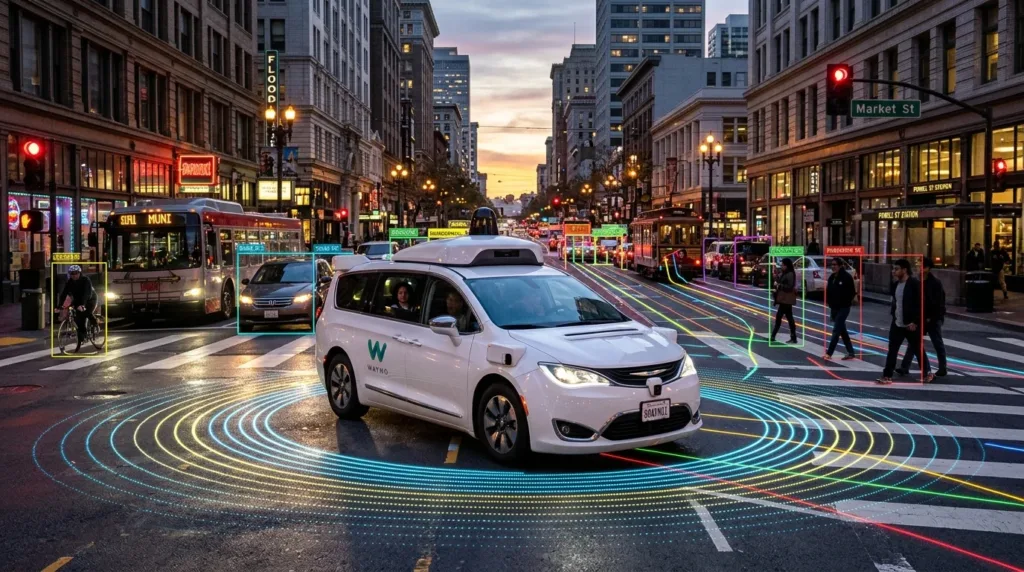
Autonomous vehicles record vast amounts of proprietary data, including system logs, event data recorder information, camera footage, and mapping decisions. This digital evidence is crucial for an Auto Accident Attorney to prove liability. Unfortunately, tech companies are often reluctant to release this data voluntarily.
It typically takes legal pressure, such as a subpoena, to force these multi-billion-dollar corporations to hand over their sensor logs and video files. This is exactly why digital evidence is becoming increasingly important in modern personal injury cases. Without it, you are left fighting an uphill battle against well-funded corporate legal teams.
How California’s Comparative Negligence Law Impacts Your Claim
California operates under a pure comparative negligence system. This means that fault can be shared among multiple parties, and your compensation will be reduced by your percentage of fault. If a robotaxi strikes you, the tech company might try to shift the blame onto you, claiming you jaywalked or acted unpredictably.
For example, in January 2026, a Waymo robotaxi struck a child outside a Santa Monica elementary school, prompting federal investigations. While the sensors detected the child and braked, tech companies often use such scenarios to argue the victim’s actions made the collision unavoidable.
An experienced legal advocate knows how to counter these tactics. By analyzing the vehicle’s reaction times and programming, your legal team can demonstrate that the autonomous system failed to react appropriately, protecting your right to full compensation.
Navigating Insurance Claims Against Multi-Billion-Dollar Tech Giants
Going up against a corporate giant like Waymo requires a strategic approach. California requires companies operating driverless vehicles to carry at least $5 million in insurance coverage. While this ensures funds are available, accessing them is another matter entirely.
Passengers who use the Waymo app are bound by terms of service that include an arbitration clause, which dictates how and where claims are handled. However, non-riders like pedestrians, cyclists, and other drivers are not bound by these restrictive clauses and can pursue traditional lawsuits.
At Solution Now Law Firm, our team brings over 50 years of combined experience working inside the insurance industry. We understand exactly how adjusters attempt to devalue claims, whether they involve human drivers or autonomous technology. If you are struggling with pain, mounting medical bills, and lost wages, you deserve a dedicated support team to fight for the compensation you are owed.
Frequently asked questions
Who is legally responsible if a driverless Waymo car hits me?
In California, liability typically falls on the entity that caused the autonomous technology to engage, which is usually the fleet operator like Waymo. However, liability can also extend to vehicle manufacturers, software developers, or even negligent third parties depending on the specific cause of the crash.
Can I sue Waymo directly if I am injured in an autonomous vehicle accident?
Yes, you can pursue a claim against Waymo. If you were a passenger, your claim may be subject to the arbitration clause in their terms of service. Non-riders, such as pedestrians or other drivers, are not bound by this clause and can file a traditional personal injury lawsuit.
What evidence is needed to prove a robotaxi caused my injuries?
Proving liability requires specialized digital evidence stored by the vehicle. This includes sensor readings (LIDAR/radar), camera footage, event data recorder information, and internal system logs. Tech companies rarely release this data voluntarily, usually requiring legal intervention to secure it.
How does the new California law AB 1777 affect my personal injury case against Waymo?
Enacted in July 2026, AB 1777 allows law enforcement to issue a notice of noncompliance when a driverless vehicle violates traffic laws. This creates an official, documented record of the vehicle’s infraction, which serves as powerful evidence to support your personal injury claim.