If you are hit by a delivery driver, the party who pays your medical bills depends on whether the driver is classified as an employee or an independent contractor, making it crucial to consult an Auto Accident Attorney. While companies like UPS hold direct corporate liability, gig platforms like DoorDash and Amazon Flex use complex commercial policies that only apply during specific phases of a delivery. Navigating these overlapping coverage layers requires proving the driver’s exact app status at the moment of the crash.
Key takeaways
- UPS drivers are employees, making the company directly liable for crashes under corporate policies.
- DoorDash and Amazon Flex provide up to $1 million in coverage, but only during active deliveries.
- A dangerous coverage gap exists when gig drivers are waiting for orders, leading to claim denials.
- Lawyers use GPS telematics to prove a driver’s active status and unlock commercial insurance policies.
In this article
- The December Danger: Why Delivery Crashes Spike During Peak Season
- UPS vs. Gig Economy: How Employment Status Affects Liability
- The $1 Million Question: Navigating DoorDash and Amazon Flex Commercial Policies
- The Gig Worker Insurance Gap and Personal Policy Denials
- How an Auto Accident Attorney Proves Active Delivery Status
- Taking on Aggressive Commercial Insurance Adjusters in the Bay Area
- Frequently asked questions
The December Danger: Why Delivery Crashes Spike During Peak Season
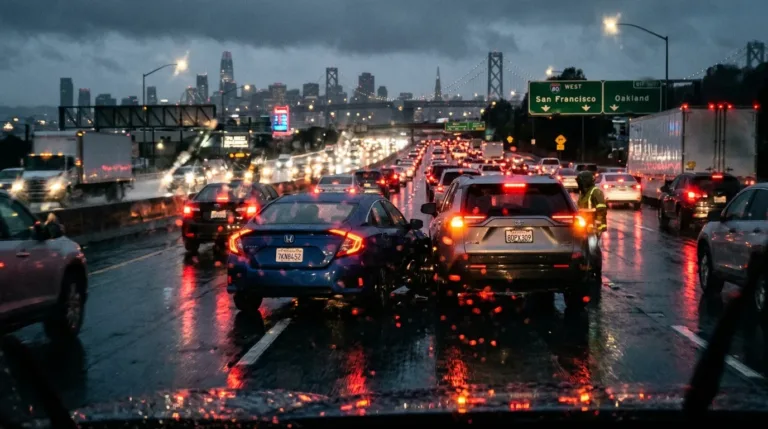
The holiday season brings joy, celebration, and an overwhelming surge in online shopping. To keep up with the massive influx of packages and food orders, delivery drivers are pushed to their limits. This pressure creates a perfect storm for severe collisions on Bay Area roads. Tight schedules, driver fatigue, increased package volume, and hazardous winter driving conditions all contribute to a significant spike in delivery-related accidents during the December peak season.
According to recent data from the National Highway Traffic Safety Administration (NHTSA), December remains one of the most dangerous months for driving. The combination of rushing delivery vehicles and an increase in holiday DUI crashes makes the roads incredibly treacherous. When victims suffer severe injuries in these collisions, they are often left overwhelmed by medical bills and unsure of who is actually responsible for their damages.
Knowing immediately after a vehicle accident how to identify the driver’s employer or gig platform is the first critical step in protecting your rights. However, establishing liability is rarely straightforward. The legal landscape surrounding delivery drivers is heavily fragmented, and the insurance coverage available to victims depends entirely on the driver’s specific employment classification at the time of the crash.
UPS vs. Gig Economy: How Employment Status Affects Liability
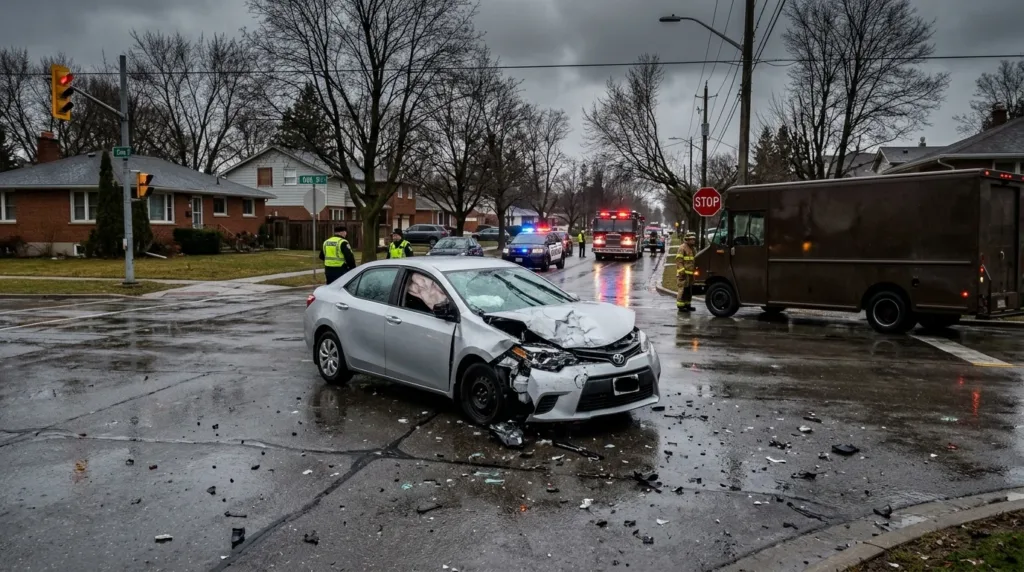
When a large commercial vehicle causes a crash, the legal doctrine of respondeat superior often applies. This means an employer is legally responsible for the actions of their employees while they are on the job. UPS drivers are W-2 employees, and many are unionized Teamsters. Because of this direct employment relationship, UPS holds corporate liability for crashes caused by their drivers. If a UPS truck hits your car, you are generally dealing directly with the company’s massive commercial insurance policies.
The scale of these commercial operations is staggering. By 2026, UPS operates a commercial fleet with over 115,000 vehicles and 127,000 drivers, delivering more than 22 million packages daily. Unfortunately, this massive footprint comes with inherent risks. From April 2023 to April 2025, Federal Motor Carrier Safety Administration (FMCSA) data shows that UPS trucks were involved in 2,481 crashes, including 843 injury crashes and 72 fatal crashes.
In stark contrast, gig economy platforms like DoorDash, Uber Eats, and Amazon Flex classify their drivers as independent contractors. This classification is intentionally used to shield the parent companies from direct liability. By labeling drivers as contractors rather than employees, these companies shift the initial burden of liability to the driver’s personal auto insurance, creating a complex maze of overlapping policies that victims must navigate to secure fair compensation.
The $1 Million Question: Navigating DoorDash and Amazon Flex Commercial Policies
To provide a safety net for third-party injuries, companies like DoorDash and Amazon Flex do carry commercial auto liability policies that offer up to $1 million in coverage. However, accessing this money is incredibly difficult. These million-dollar policies only apply during what the industry calls “Active Status.” Active status begins the exact moment a driver accepts an order on their app and ends the moment the order is delivered, unassigned, or canceled.
If a crash occurs during this specific window, the platform’s commercial policy can be triggered to cover the victim’s damages. However, there are notable exceptions that insurance adjusters will use to deny claims. For example, Amazon Flex’s commercial policy does not apply in New York, strictly excludes passengers in the Flex driver’s vehicle, and only applies if the driver was actively delivering during a pre-scheduled block.
Because these policies are highly conditional, victims suffering from common auto accident injuries often face aggressive pushback from commercial adjusters. These adjusters will look for any technicality to argue that the driver was not on an active delivery, attempting to push the financial burden back onto the victim or the driver’s inadequate personal insurance policy.
The Gig Worker Insurance Gap and Personal Policy Denials
One of the most dangerous aspects of gig economy accidents is the “insurance gap” that exists during Period 1. Period 1 occurs when a driver has the delivery app open and is waiting for an order, but has not yet accepted a delivery. During this waiting period, the platform’s $1 million commercial policy does not apply. Instead, the victim must rely entirely on the driver’s personal auto insurance.
The problem is that personal auto insurance policies frequently contain strict exclusions for commercial use. If a personal auto insurer discovers that their policyholder was driving for DoorDash or Amazon Flex without a specific rideshare or delivery endorsement, they will likely deny the claim entirely. This leaves the injured victim caught in the middle, waiting for a formal denial letter from the personal insurer before the delivery platform’s excess coverage will even consider stepping in.
Fortunately, recent legislative changes have provided a slightly better safety net for California drivers. Senate Bill 1107, which took effect on January 1, 2025, doubled the state’s minimum personal auto liability limits from $15,000 per person and $30,000 per accident to $30,000 per person and $60,000 per accident. While this increase helps victims hit by gig drivers stuck in the Period 1 coverage gap, it is often still not enough to cover the devastating costs of a serious collision.
How an Auto Accident Attorney Proves Active Delivery Status
Because gig platforms frequently dispute the exact timing of a crash relative to the driver’s app status, digital evidence is the key to winning these cases. Delivery companies track GPS location, speed, and route data in real-time. An experienced Auto Accident Attorney can subpoena this telematics data to definitively prove that the driver was on an active delivery at the exact moment of the crash, unlocking the $1 million commercial policy.
In addition to GPS data, new laws are giving lawyers more tools to hold platforms accountable. California Assembly Bill 375, effective March 1, 2025, requires food delivery platforms to verify and provide customers with the driver’s first name and photograph. This law closed a notorious loophole where platforms claimed drivers were “unauthorized” users sharing accounts, which previously allowed them to deny commercial coverage. Now, lawyers can potentially pursue platforms directly for negligent hiring if an unverified driver causes a crash.
At Solution Now Law Firm in San Jose, our team utilizes over 50 years of combined insurance industry experience to navigate these layered commercial policies. Knowing how adjusters devalue claims allows us to anticipate their tactics, demand the necessary digital forensics, and build an undeniable case for our clients.
Taking on Aggressive Commercial Insurance Adjusters in the Bay Area
Dealing with commercial insurance adjusters after a delivery driver accident is an uphill battle. These professionals are trained to protect the parent company’s bottom line by delaying claims, disputing liability, and offering lowball settlements. In gig-worker accidents, the platform’s commercial policy is often considered “excess” coverage, meaning the adjuster will refuse to pay a dime until the driver’s personal auto insurer has been billed and has formally denied the claim.
This deliberate delay tactic is designed to wear victims down while they are in pain and unable to work. Adjusters know that financial desperation often leads injured parties to accept settlements that are far below the true value of their medical bills, lost wages, and suffering. Having a legal advocate who understands the internal playbook of these insurance companies levels the playing field.
If you are unsure what to do after an accident in California involving a delivery vehicle, securing immediate legal representation is vital. A dedicated legal team will handle all communication with the insurance companies, manage the complex claims process, and fight relentlessly for the compensation you are owed, allowing you to focus entirely on your physical and emotional recovery.
Frequently asked questions
Who pays my medical bills if I am hit by a DoorDash or Amazon Flex driver?
Liability depends on the driver’s app status. If the driver was actively delivering an order, the platform’s $1 million commercial policy may cover your medical bills. If they were waiting for an order, you must pursue the driver’s personal auto insurance. An attorney can help determine the exact coverage available.
Can I sue UPS directly if one of their delivery trucks hits my car?
Yes, because UPS drivers are classified as W-2 employees, the company can be held directly liable for accidents caused by their drivers under the legal doctrine of respondeat superior. Claims are generally filed directly against UPS’s corporate commercial insurance policies.
What happens if a delivery driver's personal auto insurance denies my claim?
Personal insurers often deny claims if the driver was doing commercial work without a proper endorsement. Once a formal denial is issued, a lawyer can present this denial to the delivery platform’s commercial insurer, forcing their “excess” coverage policy to step in and process your claim.
How does a delivery driver's app status affect the insurance coverage available to victims?
App status dictates which insurance policy applies. “Active status” (accepting or delivering an order) triggers the platform’s $1 million policy. “Period 1” (app on, waiting for orders) relies on the driver’s personal insurance, which often leads to complex coverage gaps and claim denials.