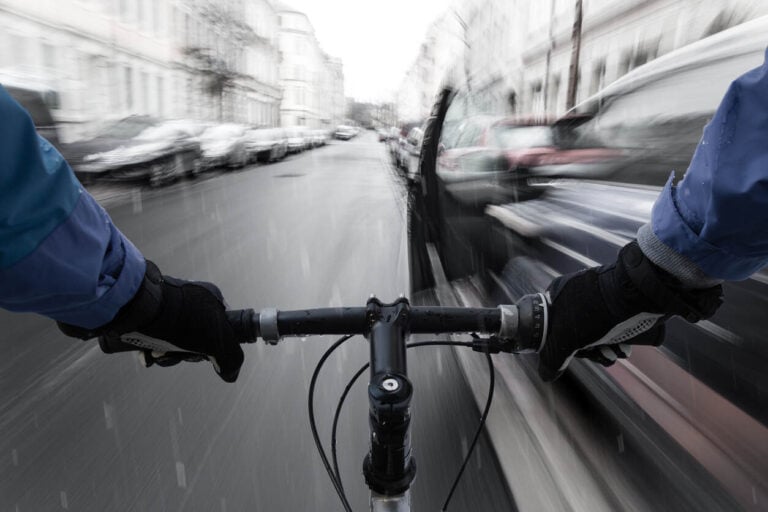

San Jose has invested significantly in expanding bicycle infrastructure across the city. Dedicated bike lanes, protected corridors, and improved roadway markings are designed to make cycling safer and more accessible. Despite these efforts, bicycle collisions continue to occur throughout Santa Clara County, often resulting in serious injuries.
For many riders, the presence of a bike lane creates an expectation of safety. However, infrastructure alone cannot eliminate the risks that arise from driver behavior, traffic patterns, and the way different road users interact. In many cases, collisions occur not because bike lanes are ineffective, but because the conditions surrounding them introduce new challenges.
Understanding why these crashes continue to happen is essential to determining liability when a cyclist is injured.
Why Bike Lanes Do Not Eliminate Collision Risk
Bike lanes are designed to separate cyclists from vehicle traffic, but that separation is not always consistent. In many parts of San Jose, bike lanes intersect with driveways, side streets, and commercial entrances where vehicles must cross into the cyclist’s path.
Common risk points include:
- Intersections where drivers turn across bike lanes.
- Driveways where vehicles enter or exit without clear visibility.
- Parking areas where drivers cross bike lanes to access spaces.
- Streets where bike lanes narrow or disappear unexpectedly.
In these situations, the presence of a bike lane does not prevent interaction between vehicles and cyclists. Instead, it creates a shared space where timing and visibility become critical.
How Driver Behavior Contributes to Bicycle Collisions
Even with clearly marked bike lanes, driver behavior remains one of the most significant factors in bicycle crashes. Many drivers are not accustomed to consistently checking for cyclists, particularly in areas where bike traffic fluctuates.
Collisions frequently occur when drivers:
- Turn right across a bike lane without checking for cyclists.
- Open vehicle doors into the path of a rider.
- Drift into bike lanes while distracted.
- Fail to yield at intersections.
- Misjudge a cyclist’s speed or distance.
In busy San Jose corridors, where drivers are navigating traffic signals, pedestrians, and multiple lanes, cyclists can be overlooked at critical moments.
Why Urban Traffic Patterns in San Jose Increase Risk
San Jose’s roadways combine multiple types of traffic in relatively confined spaces.
Cyclists often share the road with:
- Commuters traveling between major highways such as 101 and 280.
- Delivery drivers are making frequent stops.
- Rideshare vehicles pick up and drop off passengers.
- Pedestrians moving through commercial and residential areas.
This mix of traffic increases the likelihood of unpredictable movements. A driver stopping suddenly, a passenger opening a door, or a vehicle making an unexpected turn can place a cyclist at immediate risk.
Even well-designed bike lanes cannot fully account for these real-world conditions.
How Liability Is Determined in Bicycle Collision Cases
When a bicycle collision occurs, determining liability requires a detailed examination of how the crash happened. Investigators must consider not only the presence of a bike lane, but also the actions of both the driver and the cyclist.
Key questions often include:
- Did the driver fail to yield when crossing a bike lane?
- Was the cyclist traveling in a predictable and lawful manner?
- Did visibility conditions affect either party’s ability to react?
- Was the driver distracted at the time of the collision?
- Did roadway design contribute to the interaction between the vehicle and the cyclist?
Because these cases often involve competing narratives, establishing fault depends heavily on evidence.
The Importance of Evidence in Bicycle Accident Claims
Bicycle collision cases frequently rely on objective evidence to determine what occurred in the moments leading up to the crash. Unlike vehicle-only collisions, cyclist-only collisions provide less physical protection, often resulting in more severe injuries and fewer direct witnesses.
Important evidence may include:
- Surveillance or traffic camera footage.
- Witness statements from nearby drivers or pedestrians.
- Damage patterns on the vehicle and bicycle.
- Roadway markings and lane configuration.
- Cell phone records indicating driver distraction.
In San Jose, where many intersections and commercial areas are monitored, video evidence can be especially valuable when it is obtained quickly.
Why These Cases Often Lead to Disputes
Bicycle collisions often involve disagreements about right-of-way and visibility. Drivers may claim they did not see the cyclist, while cyclists may assert that they were clearly within a designated lane.
Insurance companies may attempt to:
- Assign partial fault to the cyclist.
- Argue that the cyclist was outside the bike lane.
- Question whether the cyclist was visible.
- Minimize the role of driver distraction.
Because of these challenges, even cases that appear straightforward can become complex.
How Solution Now Law Firm Handles Bicycle Collision Cases in San Jose
Bicycle accident cases require a thorough investigation of both roadway conditions and the actions of everyone involved. Solution Now Law Firm examines the full circumstances surrounding the crash, including traffic patterns, lane design, and driver behavior.
By analyzing evidence such as video footage, witness accounts, and vehicle data, the firm works to establish how the collision occurred and who is responsible.
As San Jose continues to expand its cycling infrastructure, the interaction between cyclists and drivers remains a critical factor in roadway safety. When a collision occurs, understanding the conditions that led to it is essential to protecting an injured cyclist’s rights.
If you were injured in a bicycle collision in Santa Clara County, call Solution Now Law Firm at (510) 983-4208 or contact us online for a free consultation. Determining liability in these cases requires careful analysis, and your recovery may depend on it.