San Mateo Blind Spot Truck Accident Lawyer
Being Out of the Trucker's View Doesn't Put You at Fault.
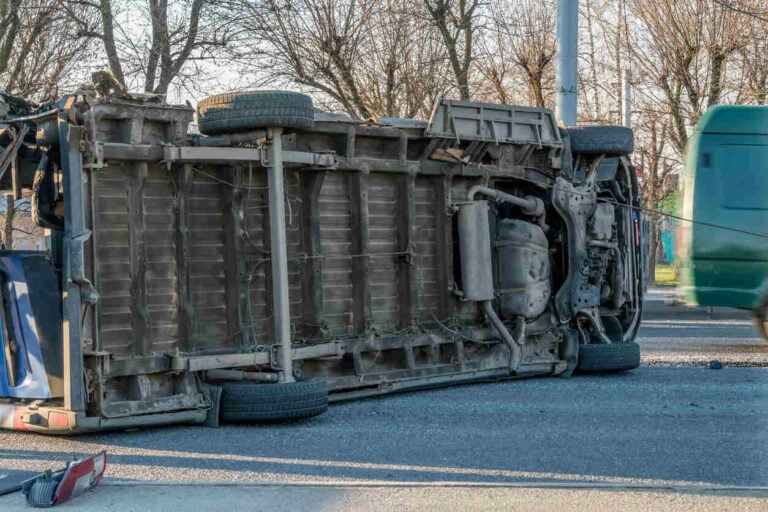
A commercial truck has blind spots on every side, and its driver is trained to keep track of the cars around it. When a truck moves into a vehicle it should have accounted for, our San Mateo truck accident attorneys work to prove who was really responsible.
$75+ million
recovered for injured clients
800+ five-star reviews
on Google and Yelp
No fee
unless we win
Available 24/7
Hablamos español · 한국어 상담 가능
In a Blind Spot Crash, Fault Is Always Up for Debate
A truck’s size and shape, high and wide with an elevated cab, create large areas where the driver can’t see: directly in front of the cab, far behind the trailer, and along both sides, with the widest gap on the right. These areas are known as “no-zones.”
Truck drivers are trained to check their mirrors constantly and to keep a mental picture of the traffic around them. Many modern trucks also carry cameras and lane alerts that warn of a vehicle in a no-zone. So when a truck merges, turns, or backs into someone, the question isn’t just where the car was. It’s whether the driver did what a careful trucker should.
These claims are rarely simple. Common blind spot crashes include:
A truck changing lanes into a car traveling alongside it
A truck making a wide right turn across a vehicle beside it
A truck backing or pulling forward into a car or person it didn't check for
The trucking company’s insurer will almost always say the injured driver was to blame for being in a no-zone. Getting a fair recovery means answering that argument with evidence. The consultation is free, and you pay nothing unless we win.
Protecting a Blind Spot Truck Claim
Call 911 and ask for a report.
An officer records the truck’s movement, the lanes, and what each driver says, before the stories change.
Record where you were and how long you'd been there.
Were you passing, holding steady, or did the truck come over into your lane? That detail often decides fault.
Photograph the truck's markings and mirrors.
Company names and cab numbers identify the carrier; a missing or broken mirror can be important.
Ask about cameras.
Note whether the truck has visible cameras and whether nearby cars or businesses might have caught the crash.
Get checked by a doctor right away.
Being struck by a truck causes injuries that can take hours or days to show.
Let us speak with the trucking company's insurer.
It will want a recorded statement to build the “no-zone” argument. Call us first.
Who May Be Responsible After a Blind Spot Crash
The truck driver
A driver who changed lanes, turned, or backed up without making sure it was clear is responsible for the harm that followed.
The trucking company
The carrier that employs the driver, and its insurer, can be held responsible for your medical bills, lost income, and pain and suffering.
Those who trained or equipped the driver
In some cases, a driving school that trained the trucker poorly, or the maker of a faulty camera or safety system, may share responsibility.
Your own coverage, when it's needed
Med Pay can help with medical bills regardless of fault, and uninsured or underinsured motorist coverage may help if the available coverage falls short.
Evidence That Shows What the Trucker Could Have Seen
Blind spot cases turn on details, and much of the best evidence sits with the trucking company. We move quickly to request and preserve it:
- Onboard camera footage, from the truck and from passenger vehicles that have their own systems
- The police report and the statements of the drivers and witnesses
- The truck driver’s cell phone records, to check for distraction
- The driver’s employment history and driving record
- Records on whether the truck’s cameras, mirrors, and lane alerts were present and working
- The driver’s training on handling blind spots
With that record, we can show whether the driver checked before moving, and whether the trucking company put a careful, properly trained driver behind the wheel.
California Rules on Fault in No-Zone Crashes
California is a fault-based state
The insurer for the at-fault party pays the injured person’s losses. To recover, you show that the driver or company was negligent and that the negligence caused your injuries.
Sharing the blame reduces, but doesn't erase, your claim
If you contributed to the crash, for example by following too closely or passing on the right, you can still recover. Under California’s pure comparative negligence rule, your compensation is reduced by your share of fault.
A no-zone isn't an automatic excuse
Heavy traffic and a truck changing lanes don’t always leave room to get clear of a blind spot. We push back when an insurer tries to put an unfair share of the blame on you.
The clock is running
You generally have two years from the date of injury to file a lawsuit, and only six months for a claim involving a government vehicle.
What Our Clients Say
As this was my first time being in a car accident, I was distraught and did not have much knowledge regarding legal fairs such as what attorney would best suit…
Jena J.
Jimin and her staff tirelessly worked for my case and kept me updated constantly whenever something happened or when there was any development. She is very knowledgeable and I'm grateful…
Albert Veist
From start to finish Jimin has been on my case and very informative about where they are in the process of things... every time it seems like I thought about…
Dominick M.
San Mateo Blind Spot Truck Accident FAQs
What is a truck's "no-zone"?
The areas around a commercial truck where the driver can’t see other vehicles: in front of the cab, behind the trailer, and along both sides, with a particularly large blind area on the right.
The insurer says I was in the truck's blind spot. Am I automatically at fault?
No. Truck drivers are trained to track the traffic around them and must check before they move. Where your car was is one fact among many, and we look at all of them.
What if I was partly to blame?
You can still recover. California reduces your compensation by your share of fault; it doesn’t take it away.
Do trucks record video?
Many trucks, and many passenger vehicles, have onboard camera systems. That footage can be overwritten, so it’s important to request it quickly.
Can I sue the trucking company as well as the driver?
Yes, in most cases. The company that employs the driver can be held responsible, and so can others whose failures contributed, such as a trainer or an equipment manufacturer.
How long do I have to bring a claim?
Generally two years from the injury to file a lawsuit, and only six months if a government vehicle was involved.
What does it cost to hire you?
Nothing upfront. We work on contingency; you pay a fee only if we recover for you.
Get Your Free, Confidential Case Review, 24/7
Trucking insurers start defending their drivers the day of the crash. Call now or send the form, and let us start defending you. We respond fast, 24/7, in English, Spanish, or Korean. Your consultation is free and confidential. No fee unless we win.
Call (408) 256-2871Free Case Review
Solution Now Law Firm
1253 Park Ave
San Jose, CA 95126
Hablamos español · 한국어 상담 가능