Common Causes of Pedestrian Accidents in San Jose
Most Pedestrian Crashes Start With a Careless Driver.
Walkers can take every precaution and still get hit. When a driver’s distraction, rushed turn, or rolling stop caused yours, our San Jose attorneys prove it and pursue what you’re owed.
$75+ million
recovered for injured clients
800+ five-star reviews
on Google and Yelp
No fee
unless we win
Available 24/7
Hablamos español · 한국어 상담 가능
How It Happened Decides Who Pays
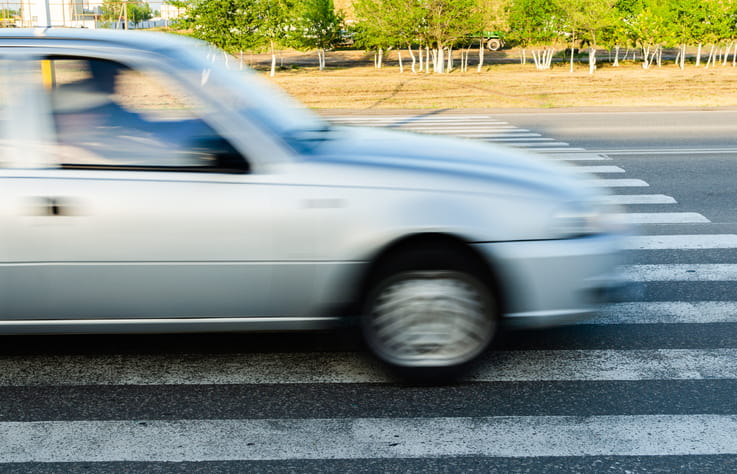
A pedestrian has no bumper, no airbag, and no seat belt. That’s why even a slow-moving car can cause broken bones, head and brain injuries, or spinal damage. And while people on foot can lower their risk, most pedestrian accidents happen for one reason: a driver wasn’t paying the attention the road demands.
The cause of your crash isn’t just a detail for the police report. It’s the heart of your claim, because it shows what the driver did wrong. The causes we see most often include:
A driver looking at a phone, a screen, or anything but the road
A driver turning left while watching for oncoming cars instead of the crosswalk
A rolling stop at a stop sign as someone steps off the curb
A driver who doesn't yield to a person crossing at a crosswalk
A driver who passes a car that has stopped to let someone cross
Whatever the cause, the insurer will look for a way to put some of the blame on you. We find the evidence that shows what really happened.
How to Preserve Evidence of What the Driver Did
Tell the officer exactly what you saw.
If the driver was on a phone, turning, or never slowed down, say so. Stick to facts and don’t guess about distances.
Note the signals and signs.
Was the walk signal on? Was there a stop sign the driver rolled through? Photograph them, or ask someone to.
Record the driver's own words.
Drivers often explain themselves at the scene: “I didn’t see you,” “I was looking the other way.” Write it down as soon as you can.
Identify every witness.
Other walkers and drivers may have seen the driver’s phone, speed, or turn. Get names and numbers before they leave.
Point us to cameras.
Businesses, homes, and buses nearby may have recorded the crash, and footage is often overwritten within days.
Get medical care the same day.
Head and internal injuries aren’t always obvious at first, and early records link your injuries to the crash.
Who Pays Depends on the Cause
A distracted or careless driver
Their liability insurance is the first source of compensation for your medical bills, lost wages, and pain and suffering.
A driver on the job
If the driver was working, including for a delivery or rideshare company, the employer or company may also be responsible.
A dangerous street or property
When a missing sign, a blocked view, or a poorly maintained sidewalk contributed, the owner or a government agency may share the blame. Claims against a government entity generally must be filed within six months.
Your own coverage when the driver can't pay
If the driver fled or has too little insurance, your uninsured or underinsured motorist coverage typically follows you as a pedestrian.
How We Prove Why the Driver Hit You
Drivers rarely admit fault once an insurer is involved. The driver who said “I didn’t see you” at the scene will later say you “came out of nowhere.” So we build the case around evidence that doesn’t change its story:
- Distraction: phone records and witness accounts of a driver looking down
- Turning crashes: the intersection layout, signal timing, and where the car was when it turned
- Stop-sign and signal violations: camera footage and traffic signal data showing who had the right of way
- Speed: crash reconstruction using vehicle damage, where the car stopped, and where you landed
Some causes point past the driver. A driver working at the time may make an employer responsible; a failed part may bring in a mechanic or manufacturer; a missing sign or crumbling sidewalk may involve the property owner or a government agency. We look at all of it, early, before evidence is lost.
The Rules Careless Drivers Break
Drivers must yield to pedestrians in crosswalks
When a pedestrian is crossing at any crosswalk, the approaching driver must yield, and stop if necessary, so the pedestrian can cross safely.
Never pass a car stopped at a crosswalk
It’s unlawful to pass a vehicle stopped for a pedestrian at a crosswalk. The stopped car often hides the person crossing, and passing it is how many crosswalk crashes happen.
Extra time for vulnerable walkers
Drivers must allow more time for elderly, disabled, and child pedestrians to cross, and should never stop in the middle of a crosswalk.
Partial fault doesn't bar you
Even if the insurer says you contributed, California’s pure comparative negligence rule lets you recover; your compensation is reduced by your share, not eliminated.
What Our Clients Say
Jimin Oh is not only an excellent and professional lawyer but she is also very kind, understanding and easy to talk to. Jimin was very helpful and patient in answering…
Katie J.
Attorney Jimin Oh was really helpful with my case. She really took care of my case and I could really rely on her. She would always check up on me…
Carina Amigable
I would like to share a good experience that I had with Ms. Jimin’s office and hopefully it will help people save time, frustration, and stress. Jimin is just very…
Claudia R.
Pedestrian Accident Causes: Your Questions
What causes most pedestrian accidents in San Jose?
Driver negligence, in most cases: distraction, failing to yield at crosswalks, rolling through stop signs, and turning without checking for people crossing. The specific cause in your case shapes who is liable and what evidence we need.
The driver says they didn't see me. Does that help them?
No. Drivers must watch for pedestrians, and “I didn’t see you” usually means they weren’t looking. It can actually help your case, especially if a witness or the police report records it.
I was hit by a driver turning left. Who's at fault?
Usually the driver. Drivers turning left often focus on oncoming traffic and miss someone in the crosswalk, but that doesn’t excuse them from yielding. Signal data and the intersection layout help prove it.
Can more than one party be responsible?
Yes. An employer, a vehicle owner, a mechanic or parts manufacturer, a property owner, or a government agency can share liability depending on what caused the crash. More responsible parties can mean more insurance available.
What if I was looking at my phone or crossing mid-block?
You may still recover. Under California’s pure comparative negligence rule, your compensation is reduced by your share of fault, not eliminated. The driver still had a duty to watch for you.
How do you prove the driver was distracted?
With phone records, witness accounts, camera footage, and the driver’s own statements. We move quickly, because footage and memories fade.
What injuries do pedestrian crashes usually cause?
Head and brain injuries, spinal cord injuries, broken bones, soft tissue damage, and, in the worst cases, fatal injuries. Because they are often severe, the compensation at stake is often significant.
What does it cost to talk to you?
Nothing. Your consultation is free, and we work on contingency: you pay no fee unless we win.
Get Your Free, Confidential Case Review, 24/7
The evidence that shows why the driver hit you, from camera footage to witness memories, starts to disappear within days. Call now or send the form; we respond fast, 24/7, in English, Spanish, or Korean. Your consultation is free and confidential. No fee unless we win.
Call (408) 256-2871Free Case Review
Solution Now Law Firm
1253 Park Ave
San Jose, CA 95126
Hablamos español · 한국어 상담 가능