When someone dies because of a car crash or another traumatic event in California, one of the most important witnesses may be the person who was killed. They cannot describe what they saw, what another driver did, or what happened in the seconds before the incident.
Increasingly, technology can help fill in parts of that missing story.
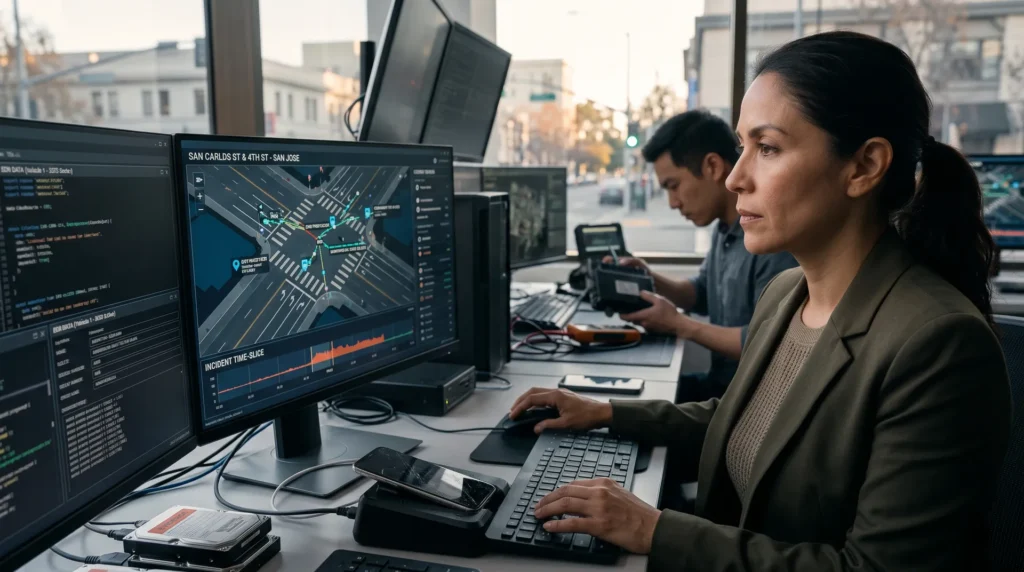
Phones, vehicles, cameras, apps, and other connected devices generate enormous amounts of information as people move through their daily lives. In a fatal injury case, that digital trail may help establish where people were, what they were doing, and how events unfolded. For families pursuing a wrongful death claim in San Jose or elsewhere in Santa Clara County, identifying and preserving this evidence can become an important part of determining responsibility.
Modern Vehicles Create a Digital Record
Cars are no longer purely mechanical machines. Many contain electronic systems capable of preserving information about what happened immediately before a collision.
Depending on the vehicle and circumstances, available data may provide information about speed, braking, acceleration, seat belt use, or other vehicle activity. Newer vehicles may also contain sophisticated driver-assistance technology, cameras, navigation systems, or other electronic features that generate additional information.
This can be particularly important when accounts of a fatal collision conflict. Instead of relying solely on what surviving drivers remember, or claim occurred, investigators may be able to compare those statements with objective vehicle data.
A Phone Can Reveal More Than Whether Someone Was Texting
Cell phone evidence is often associated with distracted driving, but its potential relevance is much broader.
Call and messaging records may help establish whether a driver was communicating around the time of a crash. App activity may raise questions about whether someone was interacting with a device. Location information may help establish movements or timing.
Phones may also contain photographs, videos, or communications relevant to the events surrounding a fatal injury.
Importantly, the existence of phone activity does not automatically prove negligence. Digital information must be evaluated alongside the other evidence to understand what it actually shows and whether it had any connection to what happened.
Cameras Are Changing How Fatal Incidents Are Reconstructed
San Jose residents encounter cameras throughout the day, often without thinking about them. Businesses use security systems. Homes have doorbell cameras. Drivers use dashcams. Traffic and transportation systems may also capture roadway activity.
A fatal incident occurring near an intersection, storefront, parking lot, or residential area may therefore have been recorded from one or several angles.
Video can help answer questions that might otherwise remain disputed:
- Which vehicle entered an intersection first?
- How fast did traffic appear to be moving?
- Did a driver brake before impact?
- Was a pedestrian visible before being struck?
- Did a vehicle leave the scene?
- Were there witnesses who have not yet been identified?
The challenge is finding that footage before it disappears.
Some of the Most Valuable Evidence May Be Temporary
Digital does not mean permanent.
Businesses may routinely overwrite surveillance recordings. Dashcam footage may be deleted. Companies may retain app, GPS, or electronic records according to their own data policies. Vehicles involved in serious crashes may eventually be repaired, sold, or destroyed.
That creates an important difference between knowing that digital evidence might exist and actually securing it.
After a fatal injury, an investigation may involve identifying nearby cameras, determining what electronic systems were involved, requesting relevant records, and taking appropriate steps to preserve information before it is lost.
Digital Evidence Can Reveal Other Responsible Parties
Technology can also expand an investigation beyond the person immediately involved in an incident.
If a delivery or rideshare driver causes a fatal collision, for example, app and GPS records may establish whether the driver was working at the time. Commercial vehicle records may reveal communications between a driver and company. Electronic information can also help reconstruct the involvement of multiple vehicles in a chain-reaction crash.
That matters because a wrongful death claim may involve more than one responsible party or source of insurance coverage.
Building the Story the Evidence Supports
No single text message, video clip, or piece of vehicle data necessarily explains a fatal incident. The real value of digital evidence often comes from combining it with police reports, physical evidence, witness statements, medical records, and other information.
Solution Now Law Firm investigates fatal injury cases with that broader picture in mind. When digital evidence may help establish what happened, the firm works to identify and preserve relevant information and evaluate it alongside the other facts of the case.
If your family lost a loved one because of someone else’s negligence in San Jose or elsewhere in Santa Clara County, call Solution Now Law Firm at (510) 983-4208 or contact the firm online for a free consultation. The evidence needed to understand what happened may already exist, but preserving it can be time-sensitive.