San Jose sits at the center of Silicon Valley, a region known for developing the technologies that shape how people live and work. That innovation has also transformed the way many vehicles operate. Modern cars increasingly include driver-assistance technologies designed to help with steering, braking, speed control, and lane positioning. These features promise greater convenience and safety, but they can also cause a crash.
When a collision involving a vehicle equipped with advanced driver-assistance systems occurs, determining who is responsible can become far more complicated than in a traditional crash. Questions may arise about whether the driver was in control, whether the technology malfunctioned, or whether a manufacturer or software developer played a role. In California injury claims, these questions can dramatically affect how liability is determined.
Understanding Driver-Assist Technology in Modern Vehicles
Many vehicles on the road today include features such as adaptive cruise control, automatic emergency braking, lane-keeping assistance, and driver monitoring systems. While these technologies can assist with certain driving tasks, they are not fully autonomous.
Drivers are still expected to remain attentive and ready to take control at any moment.
The challenge arises when drivers misunderstand the capabilities of these systems. Some motorists assume that their vehicles can safely handle situations without human input, even though the technology was never designed to replace the driver entirely. When drivers rely too heavily on automated features, reaction times may slow, and situational awareness may decline.
In San Jose traffic, where sudden stops, merges, and lane changes are common, that delay can lead directly to collisions.
When Technology and Human Decisions Intersect
Crashes involving driver-assistance systems often occur when both technology and human behavior play a role. A vehicle’s automated braking system might fail to recognize an obstacle, or a lane-keeping feature might disengage unexpectedly. At the same time, the driver may have been distracted or overconfident in the system’s abilities.
This overlap makes determining responsibility more complex. Investigators must consider whether the driver misused the technology, whether the system malfunctioned, or whether design limitations contributed to the crash. In some cases, the driver remains fully responsible. In others, additional parties may share liability.
Understanding how the technology functioned in the moments leading up to a crash becomes critical to determining fault.
The Role of Vehicle Data in Autonomous Technology Cases
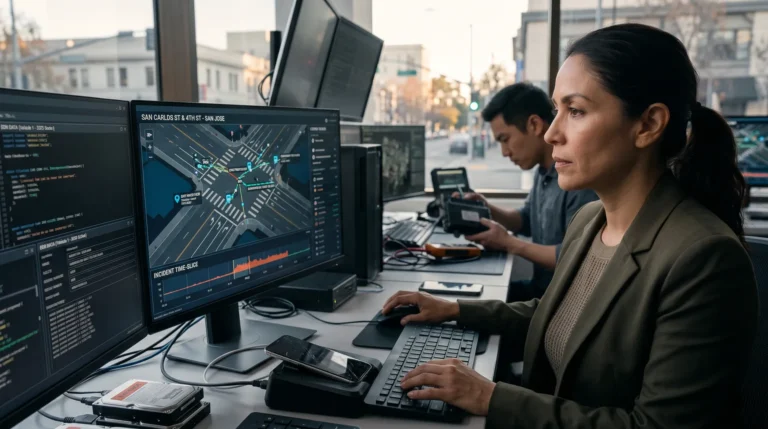
Many modern vehicles record extensive data about driving conditions and system activity. Event data recorders and telematics systems may capture information such as speed, braking, steering input, and whether driver-assistance features were active.
This information can reveal important details about a crash, including whether a driver attempted to intervene or whether the system issued warnings before impact. In cases involving advanced technology, these digital records often provide the clearest picture of what actually happened.
Accessing and analyzing this data requires technical expertise. Without a detailed investigation, crucial evidence about system performance or driver behavior may be overlooked.
Why Insurance Companies Often Dispute These Claims
Insurance companies are still adapting to the legal questions raised by automated driving technology. When these features are involved in a crash, insurers may attempt to shift blame in several directions. They may argue that the driver failed to properly monitor the vehicle, that the system functioned as designed, or that the injured party contributed to the crash.
Because autonomous technology is still evolving, insurers sometimes rely on the complexity of these systems to create uncertainty. When liability is unclear, they may attempt to reduce settlement offers or delay the claims process while responsibility is debated.
For injured victims, this uncertainty can make it far more difficult to recover fair compensation.
Investigating Autonomous Technology Collisions in San Jose
Determining liability in crashes involving driver-assistance technology requires a detailed review of both human and technological factors. Investigators may examine vehicle data, software logs, driver behavior, and roadway conditions to understand what occurred.
In some cases, the investigation may involve specialists who analyze how automated systems operate and whether those systems responded appropriately to road conditions. These experts help clarify whether the crash resulted from driver negligence, technological limitations, or a combination of both.
Because Santa Clara County roads are filled with vehicles equipped with advanced technology, these investigations are becoming increasingly common.
How Solution Now Law Firm Approaches Technology-Related Crash Claims
Cases involving automated driving features require careful analysis and technical knowledge. Solution Now Law Firm examines the full scope of evidence in these collisions, including digital vehicle data, crash reconstruction analysis, and witness accounts.
By investigating how driver behavior and technology interacted before the crash, the firm works to identify all responsible parties and build a clear picture of what caused the collision.
As vehicles continue to evolve, the legal challenges surrounding automated driving systems will only become more complex. For injured victims in San Jose, understanding how these technologies affect liability can be critical to protecting their rights.
If you were injured in a crash involving a vehicle equipped with driver-assistance technology, call Solution Now Law Firm at (510) 983-4208 or contact us online for a free consultation. Understanding how liability works in these cases can make a significant difference in your recovery.