
Fremont Car Accident Insurance Claims Lawyer
Know What Your Claim Is Worth Before the Insurer Tells You.
After a Fremont crash, the at-fault driver’s insurance company decides what it wants to pay long before you know what your injuries will cost. Our attorneys gather the evidence, add up every loss, and negotiate until the number is fair.
$75+ million
recovered for injured clients
800+ five-star reviews
on Google and Yelp
No fee
unless we win
Available 24/7
Hablamos español · 한국어 상담 가능
A Claim Is a Negotiation. Come Prepared.
California is an “at-fault” state. When another driver causes your crash, you can recover your losses through a third-party claim against that driver’s insurance company. On paper, the process is straightforward: you prove fault, you prove your damages, and the insurer pays.
In practice, the bigger your losses, the harder the insurer works to shrink them. Adjusters handle claims every day, and a seemingly minor mistake early on, such as a casual statement or a quick signature, can compromise your ability to recover later. Getting help makes sense when:
You were injured, or your vehicle and property damage is significant
The adjuster wants a statement from you, or is pushing for a quick decision
The first offer came in far below what your bills alone add up to
You aren't sure what your pain, lost income, and future care are worth
Small, property-only claims can often be settled on your own. When you’ve been hurt, it’s worth a free conversation with a lawyer before you accept anything.
Handling Your Fremont Car Insurance Claim the Right Way
Report the crash and get treated.
A police report and prompt medical care create the two records every injury claim is built on.
Give the insurers facts, not opinions.
Where and when it happened is enough. Don’t guess about fault or describe your injuries as “fine” while you’re still being treated.
Keep a running file of your losses.
Medical bills, prescriptions, pay stubs showing missed work, repair estimates, and receipts for every out-of-pocket cost.
Write down how the injuries affect your days.
Pain levels, sleep, missed family events, and work you can’t do. These notes help prove losses that don’t come with a receipt.
Wait until you understand your injuries before valuing the claim.
Settling before your doctors know your prognosis can leave future treatment unpaid.
Measure every offer against the full calculation.
An offer should be compared to your total damages, not to the bills already in hand. Let us run those numbers before you respond.
What Your Insurance Claim Can Recover
The amount available depends on how seriously you were hurt and how the injuries have changed your life. We work to prove the physical, emotional, and financial impact in full:
Economic damages
The losses you can count.
- Medical expenses, past and future
- Lost income while you recover
- Lost earning capacity if you can’t return to the same work
- Vehicle repair or replacement and other property damage
Non-economic damages
The harm without a receipt, including pain and suffering, trauma, disfigurement, and loss of enjoyment of life. These losses are often the largest part of a serious claim, and the first thing an insurer tries to discount.
Wrongful death damages
When a crash takes a life, the family’s claim can include funeral and burial expenses along with economic and non-economic losses.
Additional coverage when the policy runs short
If the at-fault driver’s limits won’t cover a serious injury, your own underinsured motorist (UIM) coverage may help close the gap.
How We Move a Claim From Lowball to Fair Value
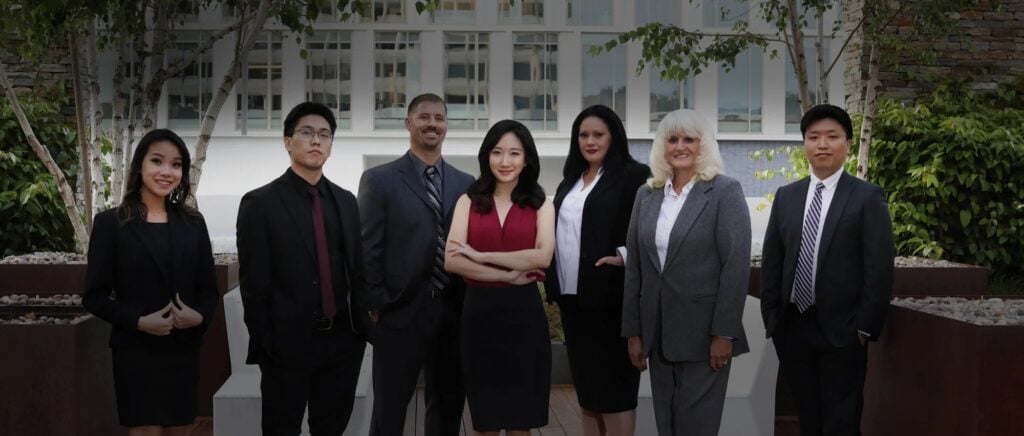
Insurance companies often do everything in their power to reject or minimize a claim: an opening offer far below what the case is worth, a request for a statement that can be used against you, or a dispute over whether your treatment was really necessary. We know those tactics because our negotiators spent a combined 50+ years inside the insurance industry.
Our work on your claim covers three things:
- Collecting the evidence. Medical records, police reports, witness statements, photos, and anything else that proves both fault and the extent of your injuries.
- Calculating every category of damages. Including the non-economic losses that are easy to overlook, so we know exactly what settlement to target before negotiations begin.
- Negotiating the settlement. Making the demand, answering each counteroffer with evidence, and filing suit if the insurer won’t move.
An insurer’s first offer is a starting point, not a verdict. We answer it with the liability facts, the full treatment history, and the impact on your daily life, and we keep negotiating, or file suit, until the number reflects the claim.
How California Insurance Claims Work
Fault decides who pays
In California’s at-fault system, the negligent driver, and in practice their liability insurer, is responsible for your losses. Proving fault is the first job in every claim.
You must prove the damages, not just the crash
Insurers pay for what the evidence shows. Records connecting each injury and expense to the collision are what turn a claim into a settlement.
Shared fault reduces the payout, but doesn't erase it
Adjusters often say you were partly to blame. Under California’s pure comparative negligence rule, your recovery is reduced by your share of fault, and never cut to zero because of it.
A lawsuit is the backstop
If the insurer won’t pay fairly, you can file suit. You generally have two years from the injury to do so, or six months for a claim against a government entity.
What Our Clients Say
Jimin Oh is not only an excellent and professional lawyer but she is also very kind, understanding and easy to talk to. Jimin was very helpful and patient in answering…
Katie J.
As this was my first time being in a car accident, I was distraught and did not have much knowledge regarding legal fairs such as what attorney would best suit…
Jena J.
Jimin is extremely straightforward, confident, and detailed. Do not judge her by her young looks! She's very knowledgeable and experienced. I experienced my first major car accident and needed a…
Venus Nguyen
Fremont Car Insurance Claim FAQs
What is a third-party insurance claim?
It’s a claim you make against someone else’s insurance, usually the at-fault driver’s liability policy, rather than your own. Because California is an at-fault state, that’s the main path to compensation after another driver causes a crash.
How is the value of my claim calculated?
By adding up economic damages, such as medical bills and lost income, and non-economic damages, such as pain and suffering and loss of enjoyment of life. The severity of your injuries and how long they affect you drive the total. We calculate it before any negotiation begins, so you know what a fair number looks like.
Do I really need a lawyer for an insurance claim?
Not always. A small, property-damage-only claim can often be settled fairly on your own. If you were injured, or the property damage is significant, it’s best to have an attorney: insurers work to minimize large payouts, and early mistakes are hard to undo.
The adjuster asked for a statement. Should I give one?
Talk to a lawyer first. A statement given before you understand your injuries can be used to downplay them or shift blame onto you. Once you hire us, the insurer talks to us instead.
Why is the first offer so much lower than my losses?
Opening offers are a negotiating position. They often leave out future treatment, lost earning capacity, and most of your non-economic damages. Answering with a documented demand is how the number moves.
Can my family file a claim if a loved one died in the crash?
Yes. A wrongful death claim can include funeral and burial expenses along with economic and non-economic losses. Talk to us about who can bring the claim and how soon.
What does hiring you cost?
Nothing upfront. We work on contingency; you pay a fee only if we recover compensation for you.
Get Your Free, Confidential Case Review, 24/7
The adjuster already has a plan for your claim. Get one of your own. Call now or send the form; we respond fast, 24/7, in English, Spanish, or Korean. Your consultation is free and confidential. No fee unless we win.
Call (408) 256-2871Free Case Review
Solution Now Law Firm
1253 Park Ave
San Jose, CA 95126
Hablamos español · 한국어 상담 가능


More Fremont Car Accident Resources
- Fremont Car Accident Lawyer
- Car Accident Trials in Fremont
- Collecting Evidence in Fremont Car Accident Claims
- Appealing a Car Accident Case in Fremont
- Delivery Driver Accident Lawyer Fremont
- Distracted Driving Accident Lawyer Fremont
- Head-On Collision Lawyer Fremont
- Hit & Run Accident Lawyer Fremont, California
- Experienced Parking Lot Accident Lawyer Fremont, California
- Trusted Rear-End Accident Attorneys in Fremont
- Experienced Rollover Car Accident Attorneys Fremont