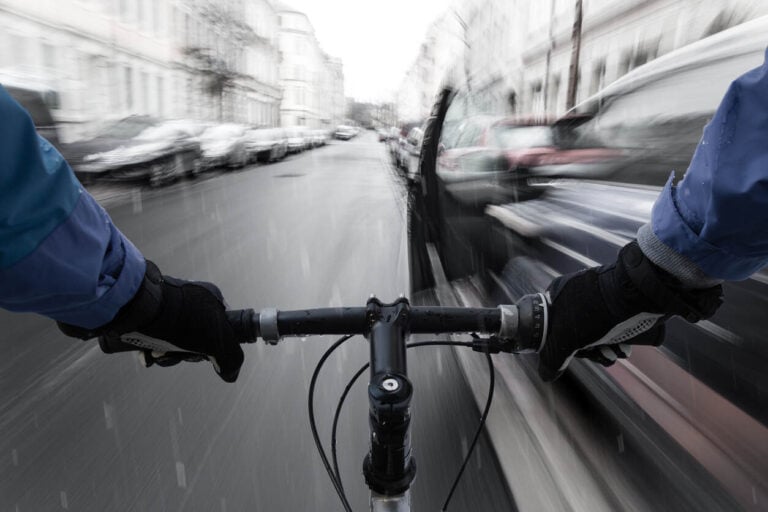
Traffic Laws for Bicyclists in San Mateo
Same Road, Same Rules, Same Rights.
California holds people on bikes to the rules of the road, and protects them the same way. Our attorneys help San Mateo cyclists use those rules to prove what a driver did wrong, and answer the insurer who says you broke one.
$75+ million
recovered for injured clients
800+ five-star reviews
on Google and Yelp
No fee
unless we win
Available 24/7
Hablamos español · 한국어 상담 가능
Knowing the Rules Protects You Twice
Cycling is a fun, practical way to get around San Mateo, but a crash with a car can cause head trauma, paralysis, and other life-changing injuries. Wearing a helmet, staying alert, and knowing the traffic laws for bicyclists are some of the best ways to lower that risk.
In California, a person riding a bicycle has the same rights on the road as a driver, and must follow the same rules. That cuts both ways after a crash. When a driver breaks a rule and hits you, the violation helps prove their fault. When an insurer claims you broke one, it will try to use that to cut your compensation.
Either way, you still have legal rights. Knowing the rules helps you ride safer, and helps you recognize when an insurer’s version of the law is wrong.
Five Rules Every San Mateo Cyclist Should Follow
Ride with traffic, on the right.
Travel in the same direction as cars, keeping to the right side of the road, with some exceptions. Drivers can predict what you’ll do, and riding against traffic puts you where no one expects you.
Light up at night.
California requires cyclists to use lights and reflectors when riding after dark. They’re the difference between being seen and being “invisible” in an insurer’s argument.
Use bike lanes where they exist.
A marked bike lane gives you your own space, and helps show you were riding where you belonged.
Ride sober, and yield to people on foot.
Cyclists can’t ride under the influence of alcohol or drugs, and must yield to pedestrians, just like drivers.
Helmets for riders under 18.
California requires riders under 18 to wear one. Adults aren’t legally required to, but a helmet is still the best protection you have.
How Traffic Laws Affect What You Recover
A driver's violation points to their liability
When a motorist broke a traffic rule and hit you, their insurer is the first source of compensation for your medical bills, lost income, and pain and suffering.
Your violation, if any, is a percentage, not a bar
Under California’s comparative fault rules, the court reduces your award by your share of fault. If you’re found 20% at fault on a hypothetical $100,000 verdict, you would receive $80,000.
Following the rules protects your number
Lights, reflectors, riding with traffic, and using bike lanes make it hard for an insurer to pin a share of fault on you.
Your own coverage may apply
If the driver fled or has too little insurance, your auto policy’s uninsured and underinsured motorist coverage may cover you on a bike.

How We Use the Rules of the Road in Your Case
When a driver hits a cyclist, the driver’s insurer will often try to limit its liability by claiming the rider was partly to blame. The traffic laws are where that argument lives, so that’s where we start.
We compare what the driver did with what the law required: whether they yielded, watched for you, and followed the signals and signs. We compare what you did with the rules that actually apply to cyclists, which are often more nuanced than adjusters admit. We gather the police report, witness statements, photos, and any video to show where you were and how you were riding.
If you did break a rule, that doesn’t end your claim. It becomes a question of how much, if at all, the violation contributed to the crash, and we work to keep your share of fault as low as the evidence allows. We have the resources to bring in experts when a case calls for them.
California Bicycle Law in Brief
Cyclists have drivers' rights and duties
A person riding a bicycle on the road has the same rights as a driver, and must follow the same traffic rules, including signals, signs, and yielding to pedestrians.
Equipment and visibility rules apply
Cyclists must use lights and reflectors when riding at night.
No riding under the influence
Riding a bicycle while impaired by alcohol or drugs is against the law.
Pure comparative negligence
An injured cyclist can recover even if mostly at fault, up to 99%, with the award reduced by their percentage of fault.
What Our Clients Say
I met with lawyers at other law offices, but after talking to Jimin, I decided to go with her because she was not only smart, honest, but also super caring.…
Annie Y.
If I didn't have Jimin and her people I would have been left with broken bones penniless and without a job. Prior to getting into contact with her my insurance…
Davina Barriga
Attorney Jimin Oh was really helpful with my case. She really took care of my case and I could really rely on her. She would always check up on me…
Carina Amigable
San Mateo Bicycle Traffic Law FAQs
Do cyclists have to follow the same traffic laws as drivers?
Yes. In California, a person riding a bicycle has all the same rights as a driver and must follow the same rules of the road, with some rules specific to bikes.
Which side of the road should I ride on?
The right side, in the same direction as traffic, with some exceptions. Riding against traffic is dangerous and can count against you after a crash.
Do I need lights on my bike?
At night, yes. California requires cyclists to use lights and reflectors after dark.
Can I get in trouble for riding a bike after drinking?
Yes. Cyclists can’t ride under the influence of alcohol or drugs. If you were hit, the driver’s insurer may raise it, but a driver who was careless can still be responsible for their share.
Is a helmet required?
For riders under 18, yes. Adults aren’t legally required to wear one, but they should for their own safety.
The insurer says I broke a traffic law. Does that mean I can't recover?
No. California reduces your award by your share of fault rather than barring your claim. And insurers often misstate the rules, so have a lawyer check.
Does a driver's traffic violation prove my case?
It helps. A violation is strong evidence that a driver didn’t use proper care, but your claim still has to show that the driver’s conduct caused your injuries.
How long do I have to file a claim?
Generally two years from the date of injury for a lawsuit, and six months for a claim against a government entity.
Get Your Free, Confidential Case Review, 24/7
You followed the rules. If a driver didn’t, you shouldn’t be left with the bills. Call now or send the form; we respond fast, 24/7, in English, Spanish, or Korean. Your consultation is free and confidential. No fee unless we win.
Call (408) 256-2871Free Case Review
Solution Now Law Firm
1253 Park Ave
San Jose, CA 95126
Hablamos español · 한국어 상담 가능