
San Jose Icy Road Truck Accident Lawyer
Ice Doesn't Excuse a Crash. Driving Too Fast for It Causes One.
When a truck slides on ice or packed snow, the real question is whether the driver slowed down and drove for the conditions. Our San Jose attorneys investigate icy-road truck crashes and hold careless drivers and their companies responsible.
$75+ million
recovered for injured clients
800+ five-star reviews
on Google and Yelp
No fee
unless we win
Available 24/7
Hablamos español · 한국어 상담 가능
Freezing Roads Demand More From Truck Drivers, Not Less
San Jose winters are usually cool and wet rather than freezing. But freezing temperatures do reach the higher elevations around the valley, and trucks traveling mountain routes can meet ice and snow on steep grades. Icy roads are uncommon here, which is part of what makes them dangerous: drivers aren’t expecting them.
On ice there’s almost no friction between tire and road. Packed snow can be just as slick, because the weight of passing vehicles compresses it and the top layer can melt and refreeze into ice. At night or in low visibility, black ice is nearly impossible to see. And a heavy truck that starts to slide is much harder to bring back under control than a car. You may have a claim if:
A truck slid, spun, or lost control on an icy or snowy road and struck you
A truck couldn't stop in time on a slick surface
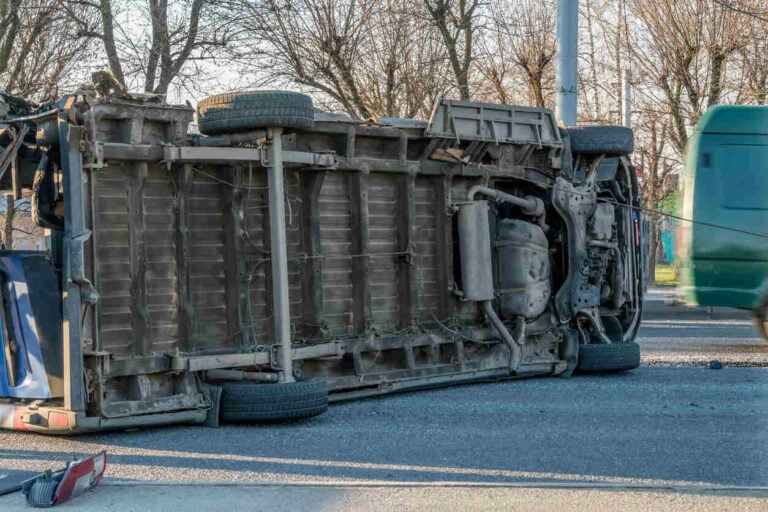
A truck jackknifed or rolled over on ice
The crash happened at night or in poor visibility, when ice is hardest to see
Insurers like to call these crashes acts of nature. But driving an 18-wheeler on a freezing road takes a high level of skill and extra caution, and a truck driver who didn’t bring both can be held responsible.
What to Do After a Truck Crash on an Icy Road
Get somewhere safe, then call 911.
Ice that caused one crash can cause another. Stay clear of sliding traffic.
Photograph the road surface right away.
Ice melts and the proof melts with it. Capture the pavement, shaded stretches, and the conditions around the crash.
Note how the truck was moving.
Was it going too fast for the conditions, fishtailing, or braking hard? Your memory of the moments before the crash matters.
Write down the time and the light.
Night, dawn, fog, or low visibility can explain why ice wasn’t seen, and whether the driver should have slowed anyway.
Get medical care.
Crashes with trucks cause serious injuries, and a prompt record ties them to the crash.
Call us before the weather clears.
We document the conditions and preserve the truck’s speed data before either disappears.
Who Pays When a Truck Slides on Ice?
The truck driver
A driver who failed to slow down, keep a safe distance, or take extra care on ice is responsible for the crash that followed.
The trucking company
The carrier is generally responsible for its driver on the job, and for its own failures, such as sending out a driver without the experience to handle winter roads or a truck with worn tires.
Commercial insurance
Trucks carry commercial policies with higher limits than personal auto insurance, which matters when injuries are serious.
Your own coverage, if needed
Med Pay can cover medical bills regardless of fault while the claim is resolved.

How We Prove a Truck Driver Didn't Drive for the Ice
Crashes in bad conditions aren’t as straightforward as ordinary collisions, because the trucking company will blame the weather. We separate what the ice did from what the driver did:
- Weather and temperature records for the time and place of the crash
- The truck’s speed and braking data, compared with what the conditions allowed
- The driver’s experience and training for driving in winter conditions
- Hours-of-service logs, since a tired driver on an icy road is doubly dangerous
- Tire condition and maintenance records
- Photos, video, and witness accounts of the road and the truck’s movements
If the driver kept up a normal speed on a freezing road, followed too closely, or pushed on when conditions called for stopping, that’s negligence, not an act of nature.
Icy Roads and Fault in California
"The ice did it" is not a defense
Every driver must drive with reasonable care for the conditions. A speed that’s safe on dry pavement can be negligent on ice, and truck drivers are expected to account for their vehicle’s size and weight.
Shared fault still pays
If your car slid too, or the insurer argues you should have been more careful, California’s pure comparative negligence rule reduces your compensation by your share of fault; it never eliminates it.
Two years to file
You generally have two years from the date of injury to file a lawsuit, and only six months for a claim involving a government vehicle. Proof of the road conditions fades far faster.
What Our Clients Say
I would like to share a good experience that I had with Ms. Jimin’s office and hopefully it will help people save time, frustration, and stress. Jimin is just very…
Claudia R.
Her services were outstanding. About a half year ago when I got into an accident, I had consultations with several personal injury law firms. I went with Jimin because I…
Hyunah Jang
She helped our family through the most difficult times we had ever gone through. When I wanted to give up she pushed us and encouraged us to keep fighting. When…
Beth S.
San Jose Icy Road Truck Accident FAQs
Can I hold a truck driver responsible for a crash caused by ice?
Often, yes. Ice makes a crash more likely, but drivers are expected to slow down and take extra care. A truck driver who drove too fast for the conditions, followed too closely, or kept going when they shouldn’t have can be held responsible.
Do roads around San Jose really get icy?
Rarely in the valley itself, but freezing temperatures reach the higher elevations around it, and trucks traveling mountain routes can hit ice and snow. Because ice is unexpected here, drivers who don’t adjust for it cause serious crashes.
What is black ice, and why is it so dangerous?
Black ice is a thin, nearly invisible layer of ice on the road, especially hard to spot at night or in low visibility. There’s almost no traction on it, so a truck can slide before the driver realizes anything is wrong.
The insurer says the crash was an act of nature. Is that true?
Not usually. Weather sets the conditions, but drivers decide how to handle them. We look at the truck’s speed, the driver’s experience, and the truck’s condition to show where the driver fell short.
Why do trucks lose control on ice more easily?
Their size and weight make them harder to stop and harder to recover from a slide. Driving a semi on ice or snow takes more skill than driving a car, which is why truck drivers must be extra cautious.
What if my car slid too?
You can still recover. California’s pure comparative negligence rule reduces your compensation only by any share of fault assigned to you.
How long do I have to file?
Generally two years from the date of the crash, and six months for a claim involving a government vehicle. Call as soon as you can, before evidence of the road conditions is gone.
Get Your Free, Confidential Case Review, 24/7
Ice melts, and with it the easiest proof of what the road was like. Call now or send the form; we respond fast, 24/7, in English, Spanish, or Korean. Your consultation is free and confidential. No fee unless we win.
Call (408) 256-2871Free Case Review
Solution Now Law Firm
1253 Park Ave
San Jose, CA 95126
Hablamos español · 한국어 상담 가능


More San Jose Truck Accident Resources
- San Jose Truck Accident Lawyer
- Bad Weather
- Blind Spot
- Common Causes
- Common Injuries
- Damages
- Distracted Driving
- Drunk Driving
- Dump Truck
- Evidence
- Fatigued Drivers
- Federal Trucking Laws
- Filing a Claim
- First Steps to Take
- Garbage Truck
- Industry Regulations
- Jackknife
- Mistakes To Avoid
- Overloaded/Overweight Accidents
- Rollover
- Settlements
- Side-Impact
- Statute of Limitations
- Tanker
- Texting and Driving
- The Role of Logbooks
- Tow Truck
- Unsafe Lane Changes