
San Jose Unsafe Lane Change Truck Accident Lawyer
A Truck Moved Into Your Lane. It Should Have Waited.
Before any lane change, a truck driver has to check every blind spot, signal, and be sure the lane is clear. Our San Jose attorneys hold drivers and trucking companies responsible when they don’t.
$75+ million
recovered for injured clients
800+ five-star reviews
on Google and Yelp
No fee
unless we win
Available 24/7
Hablamos español · 한국어 상담 가능
Every Lane Change Is a Decision the Driver Has to Get Right
Changing lanes in a car takes a glance and a signal. Changing lanes in a semi takes much more. The trailer can hide smaller vehicles alongside and behind the truck, there’s a blind spot directly in front of the cab, and a truck needs far more room to complete the move. That’s why truck drivers need a higher level of skill and awareness every time they leave their lane.
Unsafe truck lane changes usually come down to one of these:
Moving over without checking the mirrors and blind spots on every side
Changing lanes without signaling, or signaling and moving at the same time
Weaving between lanes to keep up speed instead of slowing down
Drifting out of the lane while texting, eating, or changing the radio
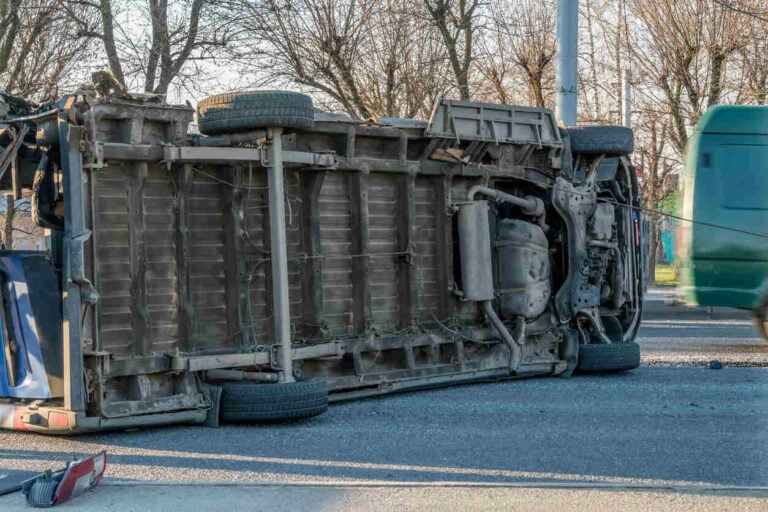
The result can be a sideswipe, a car forced off the road or into another lane, or a vehicle pushed ahead of the truck’s front bumper. If a truck’s lane change put you there, you may have a claim.
What to Do After a Truck Cuts Into Your Lane
Call 911 and get a police report.
The officer records the lanes, the vehicles’ positions, and each driver’s version while it’s fresh.
Note whether the truck signaled.
And if it did, whether it signaled well before moving or just as it started over.
Record which lanes you were each in.
Where you were driving, where the truck came from, and where each vehicle ended up.
Photograph where your car was struck.
Damage along your side or front corner, and on the side of the truck or trailer, shows how the truck came into your lane.
Get medical care.
Being sideswiped or forced off the road by a truck can cause injuries that don’t show up right away.
Don't argue about who moved first.
Decline a recorded statement with the trucking company’s insurer and let us gather the evidence.
Who Pays After an Unsafe Lane Change Crash?
The truck driver
The driver who changed lanes without checking, signaling, or making sure the move was safe is responsible for your injuries and losses.
The trucking company
The carrier is generally responsible for its driver’s negligence on the job, and for its own failures in training and supervision.
Commercial insurance
Trucks carry commercial policies with higher limits than personal auto insurance, which can make full compensation possible.
Your full losses
Medical care now and in the future, lost wages, pain and suffering, and repair or replacement of your vehicle.

How We Prove the Lane Change Was Unsafe
A lane change crash often becomes a dispute over who moved into whom. We settle it with evidence:
- Camera footage from the truck, from dashcams in nearby vehicles, and from traffic and business cameras
- The truck’s speed and steering data showing when and how fast it moved over
- Witness accounts of whether the truck signaled, and whether it had been weaving
- The driver’s phone records, when the truck drifted rather than steered
- The driver’s hours-of-service logs, since long hours make it hard to stay focused
- The damage pattern on both vehicles
We also look at the trucking company. A carrier that pushes drivers to keep up speed, or puts drivers on the road without the training to handle a big rig’s blind spots, shares the blame for what happens next.
Duty of Care and Unsafe Lane Changes
Every driver owes a duty of care
Drivers must stay focused, be aware of their surroundings, check their blind spots, use their turn signals, and drive at a reasonable speed. A driver who fails to operate their vehicle safely and causes a crash can be held liable.
For a truck driver, reasonable care accounts for the truck
Bigger blind spots and a longer vehicle mean more checking before every move. “I didn’t see them” is not a defense when a careful truck driver would have.
Partly at fault? You can still recover
If the insurer says you were speeding or changing lanes too, California’s pure comparative negligence rule reduces your compensation by your share of fault; it never eliminates it.
Two years to file
You generally have two years from the date of injury to file a lawsuit, and only six months for a claim involving a government vehicle.
What Our Clients Say
Her services were outstanding. About a half year ago when I got into an accident, I had consultations with several personal injury law firms. I went with Jimin because I…
Hyunah Jang
Jimin from the start was very professional and accommodating. She came out to east bay to meet with me. We met once, she ask for the background of the incident…
Ethan Vu
If I didn't have Jimin and her people I would have been left with broken bones penniless and without a job. Prior to getting into contact with her my insurance…
Davina Barriga
San Jose Truck Lane Change Accident FAQs
What makes a truck's lane change unsafe?
Moving over without checking mirrors and blind spots, failing to signal, weaving through traffic to keep up speed, or drifting out of the lane because of a distraction. Any of these can breach the driver’s duty of care.
The truck driver says they signaled. Does that end my claim?
No. A signal announces a lane change; it doesn’t make it safe. The driver still had to make sure the lane was clear before moving over.
How is this different from a blind-spot crash?
They often overlap. A blind-spot crash is about what the driver couldn’t see; an unsafe lane change is about what the driver did: moving without checking, signaling, or slowing down. Either way, the driver is responsible for making the move safely.
Can the trucking company be held responsible?
Often, yes. A carrier is generally responsible for its driver on the job, and for its own failures, such as poor training or pressure to keep to a tight schedule.
What if I was changing lanes too, or going over the limit?
You can still recover. Your compensation is reduced by any share of fault assigned to you, not eliminated. Insurers often overstate a victim’s share, and we push back.
I'm not comfortable speaking English. Can you still help?
Yes. Our team works with clients in English, Spanish, and Korean, and we handle the paperwork for you.
How long do I have to file?
Generally two years from the date of the crash in California, and six months for a claim involving a government vehicle.
Get Your Free, Confidential Case Review, 24/7
Dashcam and traffic camera footage is often recorded over within days. Let us secure it now. Call or send the form; we respond fast, 24/7, in English, Spanish, or Korean. Your consultation is free and confidential. No fee unless we win.
Call (408) 256-2871Free Case Review
Solution Now Law Firm
1253 Park Ave
San Jose, CA 95126
Hablamos español · 한국어 상담 가능


More San Jose Truck Accident Resources
- San Jose Truck Accident Lawyer
- Bad Weather
- Blind Spot
- Common Causes
- Common Injuries
- Damages
- Distracted Driving
- Drunk Driving
- Dump Truck
- Evidence
- Fatigued Drivers
- Federal Trucking Laws
- Filing a Claim
- First Steps to Take
- Garbage Truck
- Icy Roads
- Industry Regulations
- Jackknife
- Mistakes To Avoid
- Overloaded/Overweight Accidents
- Rollover
- Settlements
- Side-Impact
- Statute of Limitations
- Tanker
- Texting and Driving
- The Role of Logbooks
- Tow Truck