San Jose Head-On Collision Lawyer
The Worst Kind of Crash Deserves the Strongest Case.
Head-on collisions cause some of the most serious injuries on the road, and some of the hardest fights over who crossed the line. Our San Jose attorneys reconstruct what happened and pursue full compensation for injuries that can take years to heal.
$75+ million
recovered for injured clients
800+ five-star reviews
on Google and Yelp
No fee
unless we win
Available 24/7
Hablamos español · 한국어 상담 가능
When Two Vehicles Meet Front to Front, Everything Is Harder
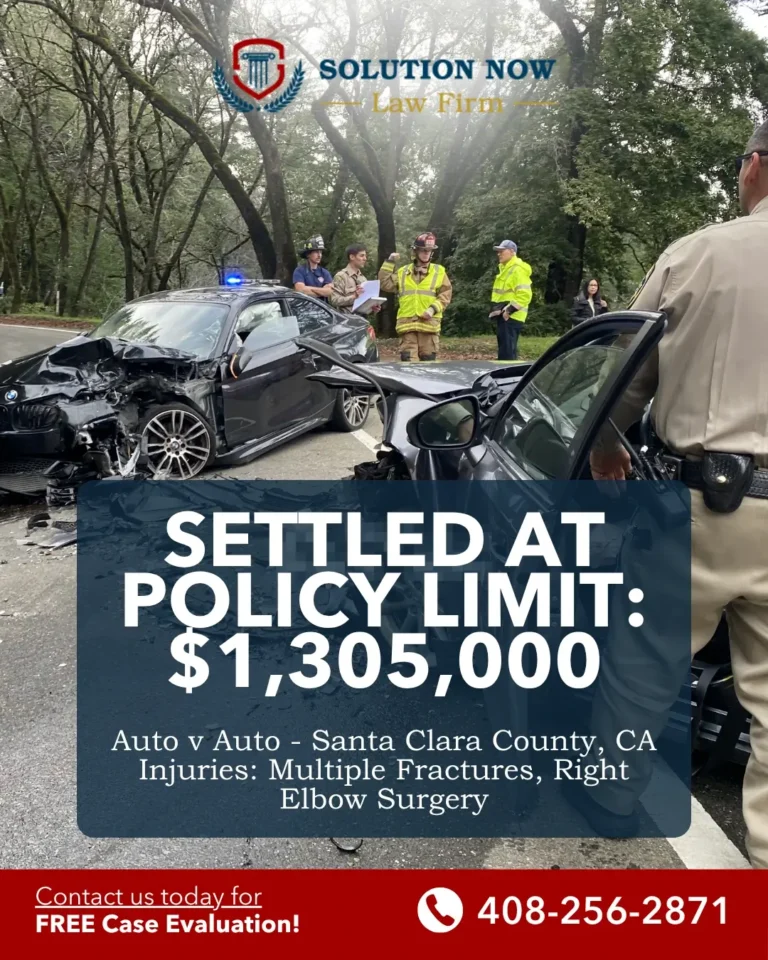
In a head-on crash, the speed of both vehicles combines into a single violent impact. Even with seatbelts buckled and airbags deployed, people walk away with brain injuries, facial and spinal injuries, and broken limbs and ribs, if they walk away at all.
The legal side is hard too. Most head-on crashes aren’t clean, squared-up impacts. They’re offset: only part of each front end connects, so the vehicles spin, strike other cars or objects, and come to rest far from where they collided. By the time the scene is cleared, it can be difficult to tell which driver was where. You may have a claim if:
The other driver drifted over the center line or into your lane
A driver was going the wrong way on a ramp, freeway, or one-way street
The driver who hit you was distracted, impaired, or swerved without looking
While you focus on recovery, we build the case. The consultation is free, and you pay nothing unless we win.
What to Do After a Head-On Collision
Get emergency care first.
Head-on impacts cause injuries that aren’t always visible, including brain and internal injuries. Let paramedics examine you, and follow through at the hospital.
Make sure police document the scene.
Ask that the report note lane positions, debris, and where each vehicle ended up.
Have someone photograph everything, fast.
If you can’t, ask a family member to capture the scene, gouge marks, debris field, and both vehicles before they’re towed.
Keep the vehicle, don't scrap it.
Your car’s crush damage and onboard data can show the angle and speed of impact. Tell the tow yard and your insurer not to destroy it.
Collect witness names.
Other drivers may have seen the other car cross over or head the wrong way.
Hand the insurers to us.
Serious-injury claims draw the most aggressive adjusters. Don’t give statements or sign anything until you’ve talked with a lawyer.
What a Head-On Collision Claim Should Cover
Head-on injuries are often severe, and the compensation needs to reflect the whole road ahead, not just the first hospital bill:
Medical care, now and later
Emergency treatment, surgery, rehabilitation, and the long-term care that brain, spinal, and facial injuries can require.
Lost income and earning capacity
Wages you’ve missed, and the earnings you may lose if your injuries change the work you can do.
Pain, suffering, and disfigurement
The physical pain, emotional distress, scarring, and loss of enjoyment of life that follow a violent crash.
Punitive damages in extreme cases
When a head-on crash is caused by a drunk driver or other particularly reckless conduct, courts may award damages meant to punish.
How We Prove Who Crossed the Line
Because head-on crashes scatter the evidence, we work to pin down each vehicle’s path before it’s lost:
- Police reports, diagrams, and statements taken at the scene
- Debris location, gouge marks, and final rest positions
- Crush damage and vehicle data showing speed, braking, and angle of impact
- Camera footage from nearby businesses, homes, and intersections
- Witness accounts of lane position, wrong-way driving, or erratic driving beforehand
- Toxicology and phone evidence where impairment or distraction is suspected
We also know these injuries don’t fit a quick settlement. We document the full course of treatment, including future care, before we value your claim. And we come to you: if your injuries keep you home or in the hospital, we’ll meet you where it’s easiest.
California Law After a Head-On Collision
Fault follows the lane
Every driver has a duty to stay in their lane and drive with reasonable care. A driver who crosses into oncoming traffic, whether distracted, impaired, or driving the wrong way, is typically the one who breached that duty.
Swerving isn't an automatic excuse
Drivers sometimes cross over to avoid a sudden hazard such as an animal in the road. Whether that was reasonable depends on the facts, and it doesn’t erase their responsibility to drive safely.
Both drivers may share fault
When the evidence is disputed, insurers may try to assign blame to both drivers. California’s pure comparative negligence rule reduces your recovery by your share of fault but never eliminates it.
Deadlines
You generally have two years from the injury to file a lawsuit. If a dangerous road design or missing signage contributed, a claim against the government entity can be due within six months. For a family that has lost someone, a wrongful death claim has its own deadline; call early.
What Our Clients Say
From start to finish Jimin has been on my case and very informative about where they are in the process of things... every time it seems like I thought about…
Dominick M.
I was introduced to Jimin through a friend after we had a bumper accident on a highway. Jimin came to us directly and very clearly explained the whole process, as…
Joshua Kim
This was my first time to have a car accident, so I did not know what I had to do. My friends suggested I contact Jimin since they all had…
Kwon Soonhyung
San Jose Head-On Collision FAQs
What causes most head-on collisions?
Often a distracted driver who drifts across the center line; looking away for even a few seconds is enough. Wrong-way driving onto ramps or one-way streets, impaired driving, and sudden swerves around hazards cause others.
Why are head-on crashes so dangerous even with airbags?
Both vehicles’ speeds combine, and many impacts are offset, which can spin the vehicles and reduce how well the front crumple zone protects the people inside. Occupants can be thrown sideways or into other parts of the car, not just into the airbag.
How do you prove the other driver crossed into my lane?
With the police report, debris and gouge marks, where the vehicles came to rest, crush damage, vehicle data, witnesses, and camera footage. Where the scene is unclear, reconstructing the crash from that evidence shows which car was out of its lane.
What if the other driver says I was the one who crossed over?
That’s common when the evidence is scattered. Don’t argue it with the insurer; let the physical evidence answer it. That’s why preserving your vehicle and the scene photos matters so much.
Can I get punitive damages if the driver was drunk?
Possibly. Courts may award punitive damages in DUI cases and other head-on crashes involving particularly reckless conduct, on top of compensation for your injuries.
I'm too injured to come to your office. Can you still help?
Yes. We can meet you wherever is easiest given your injuries, including at home or in the hospital, and handle the case from there.
How long do I have to file a claim?
Generally two years from the injury for a lawsuit, and as little as six months for a claim involving a government entity. Serious injury cases take time to document, so it helps to start early.
Get Your Free, Confidential Case Review, 24/7
Vehicles get scrapped and scenes get cleared within days. Call now or send the form; we respond fast, 24/7, in English, Spanish, or Korean. Your consultation is free and confidential. No fee unless we win.
Call (408) 256-2871Free Case Review
Solution Now Law Firm
1253 Park Ave
San Jose, CA 95126
Hablamos español · 한국어 상담 가능