After a car accident in San Jose, it is common for each driver to tell a different version of events. One claims the other ran a red light. The other insists the first was speeding. In the confusion that follows a crash, especially at busy intersections or on congested highways like 101 or 280, fault is rarely admitted voluntarily.
When both drivers blame each other, determining liability becomes more complex. Under California law, fault is not decided by who argues more convincingly at the scene. It is determined through evidence, investigation, and legal standards that assign responsibility based on conduct, not opinion.
Why Conflicting Stories Are So Common
In the immediate aftermath of a crash, drivers are often shaken, injured, or defensive. Memory can be unreliable under stress. Some individuals genuinely believe they were not at fault. Others may attempt to avoid responsibility to protect themselves from insurance consequences.
Conflicting accounts are especially common in:
- Intersection collisions.
- Left-turn crashes.
- Lane-change incidents.
- Rear-end accidents involving sudden stops.
- Multi-vehicle collisions in heavy traffic.
When no independent witness immediately resolves the dispute, insurance companies begin their own evaluations, which may not always favor the injured party.
How California Determines Fault
California operates under a fault-based system. That means the driver whose negligence caused the crash is financially responsible for the resulting damages.
Negligence generally requires proof that a driver:
- Had a duty to operate their vehicle safely.
- Breached that duty through careless or reckless conduct.
- Caused the collision.
- Created damages as a result.
When both drivers allege negligence by the other, investigators must examine the available evidence to determine whose actions more likely caused the crash.
The Role of Physical Evidence
Physical evidence at the scene often provides objective answers that statements alone cannot.
Investigators may analyze:
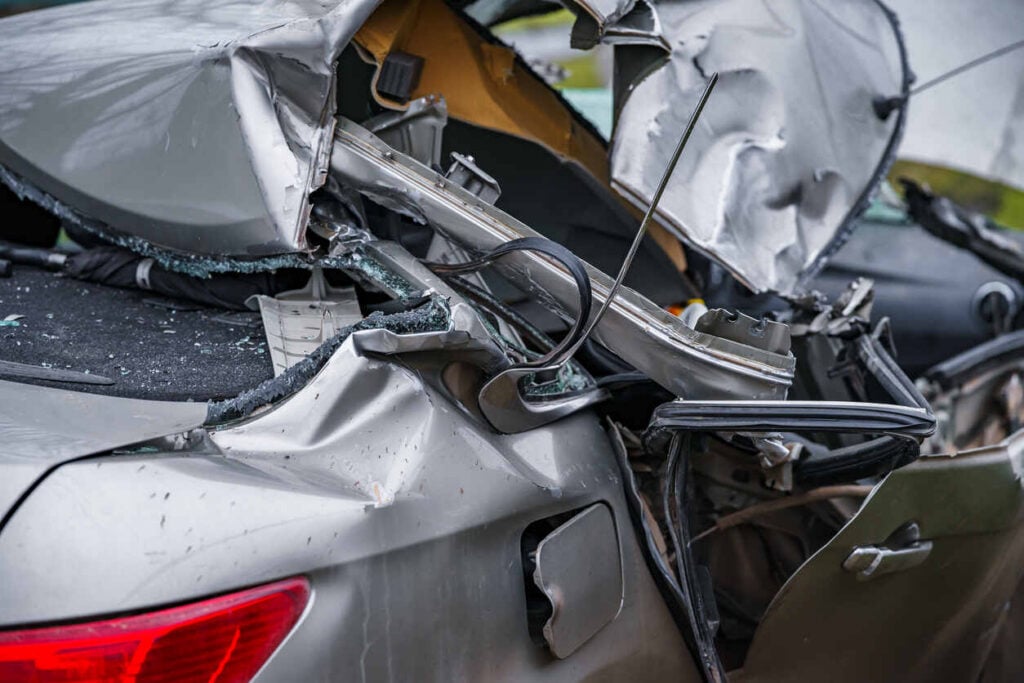
- Vehicle damage patterns.
- Points of impact.
- Skid marks and braking distance.
- Debris fields.
- Final resting positions of vehicles.
- Traffic signal timing.
For example, the location of damage can indicate which vehicle entered an intersection first or whether a driver attempted to brake before impact.
In San Jose’s high-traffic corridors, preserving this evidence quickly is critical before road crews clear the scene.
Traffic Cameras and Digital Evidence
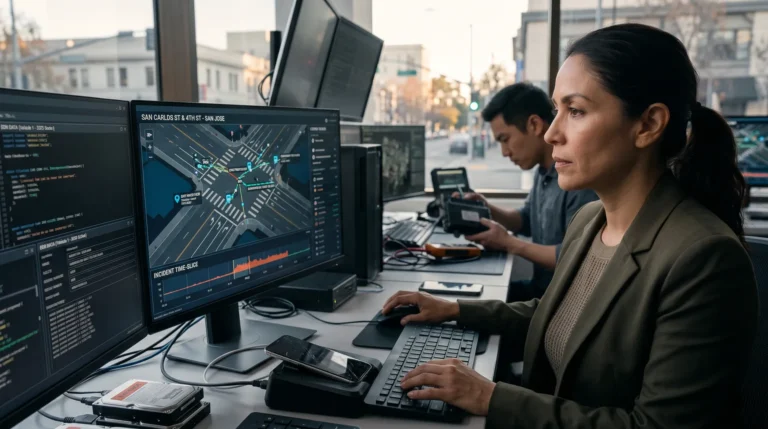
Santa Clara County has extensive traffic monitoring systems, and many businesses and homes operate security cameras. Video footage can provide clarity when drivers disagree.
Video may show:
- Which vehicle had a green light.
- Whether a driver made an improper turn.
- If a vehicle drifted across lane lines.
- How fast were vehicles traveling?
- Whether distraction played a role.
In modern vehicles, event data recorders may also reveal speed, braking, and throttle use in the seconds before impact. When cell phone use is suspected, phone records and app activity may further clarify what happened.
Eyewitness Testimony
Neutral third-party witnesses can be pivotal in disputed liability cases. A pedestrian, nearby driver, or business employee may have seen the collision from a clearer vantage point.
However, witness accounts must be evaluated carefully. Visibility conditions, distance, and lighting can affect perception.
Comparative Fault Under California Law
Even when one driver appears primarily responsible, California’s comparative fault system allows fault to be shared.
If both drivers contributed to the crash, liability may be apportioned based on percentage. For example, one driver may be found 70 percent at fault while the other bears 30 percent responsibility.
Compensation is then reduced according to the injured person’s share of fault.
Insurance companies frequently attempt to increase the injured driver’s percentage of responsibility to reduce payouts. Without careful investigation, fault allocations may not reflect the true sequence of events.
Why Insurance Companies Escalate Blame Disputes
When both drivers blame each other, insurers often take advantage of the uncertainty.
They may:
- Deny liability outright.
- Offer reduced settlements based on partial fault.
- Delay resolution while investigating.
- Use recorded statements to challenge inconsistencies.
- Pressure-injured victims to accept shared responsibility.
These tactics can significantly reduce compensation, particularly in cases involving serious injuries.
How Solution Now Law Firm Handles Disputed Liability Cases
Disputed-fault cases require a methodical, evidence-driven approach. Solution Now Law Firm investigates beyond the surface-level statements and examines the technical details that determine responsibility.
The firm analyzes crash data, secures video evidence, reviews traffic patterns on San Jose roadways, and, when necessary, works with experts to reconstruct the sequence of events.
When both drivers blame each other, the truth often lies in the physical and digital evidence, not in competing narratives.
If you were injured in a San Jose car accident where fault is being disputed, do not assume the insurance company’s version of events is final.
Call Solution Now Law Firm at (510) 983-4208 or contact us online for a free consultation. Determining fault under California law requires careful investigation, and your financial recovery may depend on it.
Related Links
- Three Mistakes to Avoid After a Car Accident
- The True Cost of a “Minor” Car Accident: Why Early Legal Help Matters