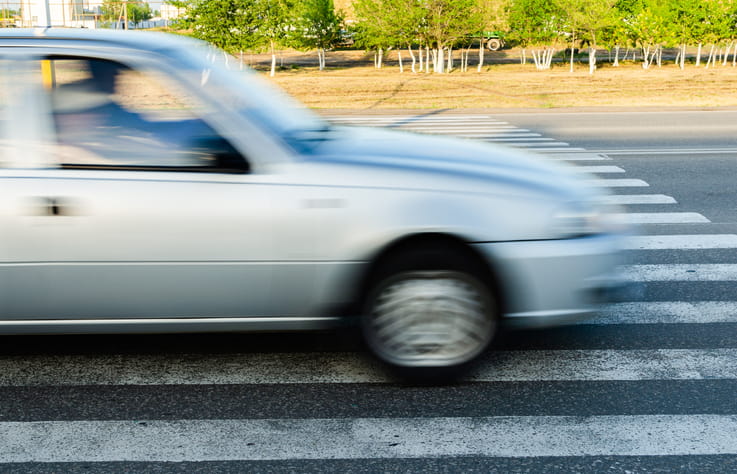
Residential streets in San Jose are often considered lower-risk than highways and major roadways. Traffic moves more slowly, and drivers expect a quieter, more predictable flow. However, when drivers exceed safe speeds in these neighborhoods, the risk of serious pedestrian injury increases significantly.
Across Santa Clara County, residential areas include narrow streets, limited visibility, and frequent pedestrian activity. When speeding occurs in these conditions, even a brief lapse in attention can result in a collision. These incidents often result in severe injuries and complex liability disputes that require careful investigation.
Understanding why speeding creates heightened danger in residential neighborhoods helps explain why these cases are often more complex than they initially appear.
Why Residential Streets Present Unique Risks for Pedestrians
Unlike controlled highway environments, residential neighborhoods are dynamic spaces where pedestrians and vehicles frequently interact. Drivers must account for variables that are not always present on larger roads.
Common characteristics of San Jose residential areas include:
- Parked vehicles that obstruct visibility along curbs.
- Narrow streets that limit space for maneuvering.
- Driveways with vehicles entering or exiting unexpectedly.
- Intersections without traffic signals or clear right-of-way control.
- Pedestrian activity, including children, families, and individuals walking pets.
In neighborhoods such as Willow Glen, East San Jose, and areas surrounding schools and parks, pedestrian movement is constant. Drivers traveling above safe speeds may not have sufficient time to react when someone enters the roadway.
How Speed Reduces Reaction Time and Increases Impact Severity
Speed affects both the likelihood of a collision and the severity of injuries when one occurs. As vehicle speed increases, the distance required to recognize a hazard and come to a stop grows significantly.
In residential environments, this creates two critical problems:
- Drivers have less time to identify pedestrians entering the roadway.
- Vehicles require more distance to stop once a hazard is recognized.
When a pedestrian is struck at higher speeds, the impact force is significantly greater. Even collisions that occur within short distances can result in serious injuries such as traumatic brain injuries, spinal trauma, or internal damage.
Because residential streets often give a false sense of safety, drivers who exceed speed limits may not fully appreciate how little margin for error exists.
Why Pedestrian Behavior Becomes a Factor in These Cases
In many residential pedestrian injury cases, insurance companies attempt to shift blame onto the injured individual. They may argue that the pedestrian stepped into the street unexpectedly, failed to use a designated crossing area, or was not paying attention.
While pedestrian behavior can be relevant, it does not relieve a driver of responsibility for operating a vehicle safely under the prevailing conditions.
In residential neighborhoods, drivers are expected to anticipate:
- Children entering the street without warning.
- Individuals crossing outside marked crosswalks.
- Limited visibility caused by parked cars or landscaping.
When a driver is speeding, their ability to respond to these foreseeable conditions is reduced. This often becomes a central issue in determining liability.
How Liability Is Determined in Residential Pedestrian Injury Claims
Establishing liability in these cases requires more than identifying that a collision occurred. Investigators must determine whether the driver’s speed contributed to the inability to avoid the crash.
Key factors that may be examined include:
- The estimated speed of the vehicle at the time of impact.
- Skid marks or braking distance leading up to the collision.
- Visibility conditions, including obstructions along the roadway.
- The location of the pedestrian at the time of impact.
- Whether the driver had sufficient time and distance to react.
Even when a pedestrian was not in a marked crosswalk, a driver traveling at an unsafe speed may still be found partially or primarily responsible for the collision.
Under California’s comparative fault system, liability may be shared between parties. However, speeding often increases a driver’s percentage of responsibility.
The Role of Evidence in Proving Speed-Related Negligence
Because drivers rarely admit to speeding, objective evidence becomes critical in these cases. Insurance companies may challenge claims by questioning how fast the vehicle was traveling or whether speed contributed to the injury.
Evidence used to establish speed and liability may include:
- Vehicle damage patterns and point of impact.
- Measurements of skid marks and stopping distance.
- Data from event data recorders or onboard vehicle systems.
- Surveillance or security camera footage from nearby homes or businesses.
- Eyewitness statements describing vehicle movement before the collision.
In residential areas, where formal traffic monitoring may be limited, securing evidence quickly is essential before it is lost or becomes unavailable.
Why These Claims Often Become Legally Complex
Pedestrian injury cases involving speeding drivers are often more complicated than they appear at first. Several factors can contribute to disputes over liability and compensation.
These may include:
- Conflicting accounts of how the collision occurred.
- Limited physical evidence due to neighborhood conditions.
- Attempts by insurers to assign partial fault to the pedestrian.
- Disagreements over how speed influenced the outcome.
Because of these challenges, a detailed investigation is often necessary to establish how the driver’s behavior contributed to the collision.
How Solution Now Law Firm Approaches Pedestrian Injury Cases in San Jose
Cases involving pedestrian injuries in residential neighborhoods require a thorough understanding of both roadway conditions and driver behavior. Solution Now Law Firm examines the full context of each incident, including visibility limitations, traffic patterns, and evidence of speeding.
By analyzing physical evidence, gathering witness accounts, and evaluating the circumstances of the collision, the firm determines the extent to which unsafe driving behavior contributed to the injury.
In San Jose, where residential neighborhoods are active, densely populated, and often unpredictable, speeding can transform an otherwise avoidable situation into a serious injury event. Establishing how and why that happened is critical to protecting an injured person’s rights.
If you or a loved one were injured in a pedestrian collision in Santa Clara County, call Solution Now Law Firm at (510) 983-4208 or contact us online for a free consultation. Understanding how liability is determined in these cases can make a meaningful difference in your recovery.