
When Truck Drivers Misjudge Stopping Distance in Congested Silicon Valley Traffic
Traffic in Silicon Valley rarely moves at a steady pace. Drivers on Highway 101, Interstate...
Read More →



















Traffic in Silicon Valley rarely moves at a steady pace. Drivers on Highway 101, Interstate 280, and other major corridors in San Jose often experience a pattern of sudden acceleration followed by abrupt braking as congestion builds and dissolves throughout the day. While this stop-and-go traffic is frustrating for any driver, it creates a particularly dangerous situation when large commercial trucks are involved.
Tractor-trailers, delivery trucks, and other heavy commercial vehicles require significantly more time and distance to slow down than passenger vehicles. When truck drivers misjudge stopping distance in dense traffic, the consequences can be severe. These collisions frequently result in multi-vehicle crashes and serious injuries for occupants of smaller vehicles.
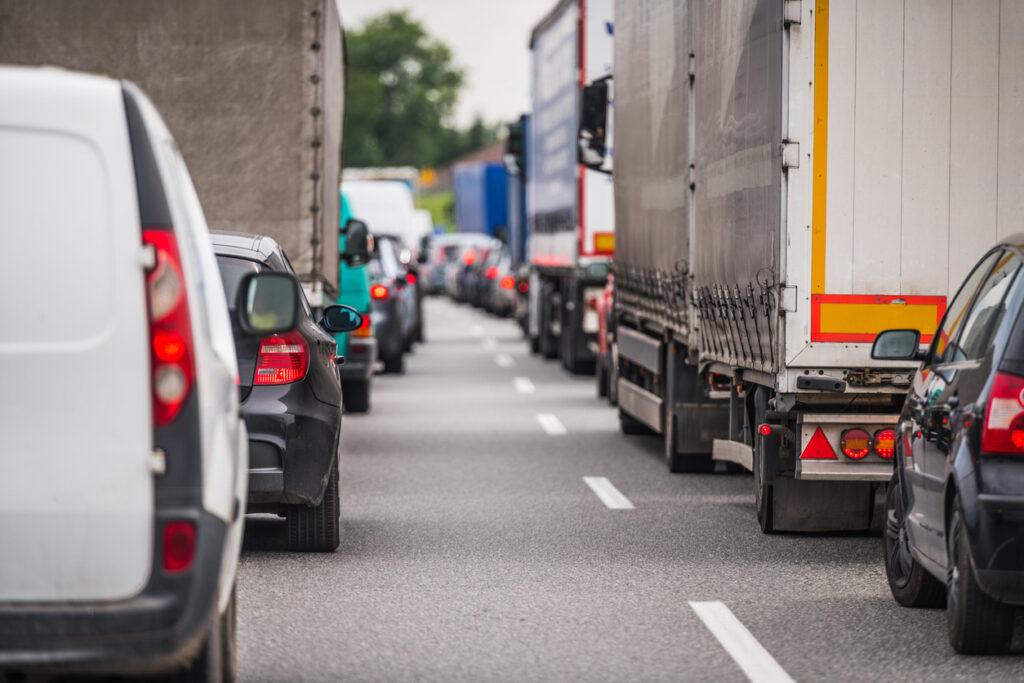
Understanding why stopping distance plays such a critical role in truck collisions helps explain why these crashes often lead to complex personal injury claims in San Jose.
A fully loaded commercial truck can weigh up to 80,000 pounds. That enormous weight affects how quickly the vehicle can respond when traffic suddenly slows. Even when a truck’s braking system is working properly, the laws of physics make it impossible for these vehicles to stop as quickly as smaller cars.
Several factors increase the stopping distance of commercial trucks:
In congested San Jose traffic, where vehicles often brake with little warning, even a brief delay can result in a serious collision.
Both commuters and commercial vehicles heavily use San Jose’s highways. Trucks regularly transport goods between ports, warehouses, distribution centers, and retail locations throughout the Bay Area.
During peak travel times, drivers encounter conditions such as:
When these conditions combine with the limited stopping ability of large trucks, the risk of rear-end or chain-reaction collisions increases significantly.
Truck collisions caused by misjudged stopping distances often occur in predictable ways. Because large trucks require additional braking distance, they are especially vulnerable when traffic conditions change suddenly.
Some of the most common scenarios include:
These crashes often result in severe injuries because of the immense force created when a heavy truck collides with a smaller vehicle.
The size and weight difference between commercial trucks and passenger vehicles makes these crashes particularly dangerous. When a truck fails to stop in time, the smaller vehicle often absorbs the majority of the impact force.
Victims may suffer injuries such as:
These injuries frequently require significant medical treatment and extended recovery periods.
When a truck driver fails to stop before colliding with traffic ahead, investigators must determine why the driver was unable to avoid the crash. Several factors may contribute to the collision.
Evidence commonly reviewed in these cases includes:
This information helps determine whether the driver failed to maintain a safe following distance or whether other safety violations contributed to the crash.
Truck crashes often require extensive investigation because multiple parties may share responsibility. In addition to the driver, the trucking company, maintenance providers, or cargo handlers may have contributed to the conditions that caused the collision.
Solution Now Law Firm reviews crash data, driver records, maintenance logs, and roadway evidence to determine exactly how the collision occurred. By examining the factors that affect stopping distance and driver decision-making, the firm works to establish accountability and pursue full compensation for injured victims.
San Jose’s busy highways create challenging driving conditions for everyone on the road. When truck drivers fail to account for the distance required to stop safely, the results can be devastating.
If you were injured in a truck collision in Santa Clara County, call Solution Now Law Firm at (510) 983-4208 or contact us online for a free consultation. Understanding your rights after a commercial truck crash can help protect your recovery and financial future.

Solution Now Law Firm
N/a