Interstate 280 runs through some of the most heavily traveled corridors in San Jose, connecting residential neighborhoods, business districts, and major commuting routes across Santa Clara County. While traffic may appear to flow smoothly at times, sudden slowdowns and congestion are common, particularly during peak hours.
Rear-end collisions occur frequently along this stretch of roadway. At first glance, these crashes may seem straightforward. One driver strikes the vehicle in front, and responsibility appears clear. However, the conditions that lead to these collisions often complicate injury claims more than they initially appear.
Understanding why rear-end crashes are so common on I-280 helps explain why determining liability and compensation is not always as simple as it seems.
Why Traffic Conditions on I-280 Lead to Rear-End Collisions
Traffic patterns on I-280 are rarely consistent. Drivers often move between open roadway and sudden congestion over short distances. This stop-and-go pattern creates conditions where even a momentary delay in reaction can lead to a collision.
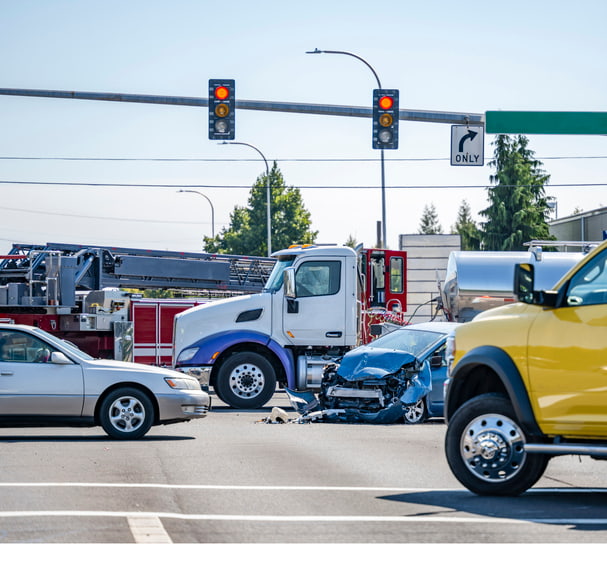 Common contributing factors include:
- Rapid transitions from high-speed travel to slowed traffic.
- Heavy merging near on-ramps and exit ramps.
- Lane changes caused by congestion or navigation adjustments.
- Commuter traffic during peak morning and evening hours.
- Construction zones that reduce lane space or visibility.
When vehicles are traveling at higher speeds, the distance required to safely stop increases significantly. Drivers who fail to adjust their following distance may not have enough time to react when traffic slows unexpectedly.
How Following Distance and Driver Attention Play a Role
Rear-end collisions often occur when a driver is following too closely or is not fully focused on the roadway. On a highway like I-280, where speeds can change quickly, maintaining a safe distance is essential.
Collisions are more likely when drivers:
- Follow too closely during high-speed travel.
- Become distracted by phones or in-vehicle systems.
- Focus on traffic in adjacent lanes instead of the vehicle ahead.
- Assume traffic will continue moving without interruption.
Even a brief lapse in attention can prevent a driver from recognizing that traffic has slowed, leading to a rear-end impact.
Why These Crashes Are Not Always as Simple as They Seem
Although rear-end collisions are often associated with the trailing driver, the circumstances leading up to the crash can introduce additional factors.
In some cases, the lead vehicle may have:
- Stopped suddenly without a clear reason.
- Merged into a lane with insufficient space.
- Experienced a mechanical issue or unexpected hazard.
In multi-vehicle collisions, the situation can become even more complex. A chain-reaction crash may involve several drivers, each contributing to the sequence of events.
Determining who is responsible requires examining how the collision unfolded, not just the point of impact.
The Role of Multi-Vehicle Chain Reactions
On busy sections of I-280, rear-end collisions often involve more than two vehicles. When traffic slows abruptly, one collision can trigger a series of impacts involving multiple drivers.
These chain-reaction crashes may involve:
- A vehicle striking the car in front and pushing it into another vehicle.
- Multiple drivers failing to stop in time as traffic slows.
- Secondary impacts that cause additional injuries.
In these situations, liability may be shared among several parties. Each driver’s actions must be evaluated to determine their contribution to the overall collision.
Why Injury Claims Become More Complicated
Rear-end collisions frequently lead to injury claims involving neck, back, and head trauma. While these injuries are common, they are also frequently disputed by insurance companies.
Complications in these claims may include:
Because these injuries are not always immediately visible, establishing their connection to the collision requires thorough medical documentation.
The Importance of Evidence in Rear-End Collision Cases
Proving how a rear-end collision occurred often depends on objective evidence. This is particularly important when liability is disputed or when multiple vehicles are involved.
Key evidence may include:
- Vehicle damage patterns and points of impact.
- Skid marks indicate braking distance.
- Traffic camera or dashcam footage.
- Event data recorder information showing speed and braking.
- Witness statements describing traffic conditions.
On a highway like I-280, where traffic moves quickly and accidents are cleared rapidly, preserving this evidence is critical.
How Insurance Companies Evaluate Rear-End Claims
Insurance companies often approach rear-end collision claims with assumptions about fault. While the trailing driver is frequently considered responsible, insurers may still attempt to reduce their liability.
They may argue that:
- The lead driver contributed to the crash.
- The injuries are less severe than claimed.
- Medical treatment was unnecessary or excessive.
- Multiple drivers share responsibility.
These arguments can affect both liability and the amount of compensation offered.
How Solution Now Law Firm Handles Rear-End Collision Cases in San Jose
Rear-end collision cases require more than a basic review of the accident. Solution Now Law Firm examines the full sequence of events leading up to the crash, including traffic patterns, driver behavior, and available evidence.
This approach includes:
- Analyzing how traffic conditions contributed to the collision.
- Reviewing vehicle data and physical evidence.
- Evaluating medical records to establish the extent of injuries.
- Identifying whether multiple parties share responsibility.
By looking beyond surface-level assumptions, the firm builds cases that reflect what actually occurred.
Why These Collisions Matter in San Jose
Rear-end crashes on I-280 are a common part of daily traffic in San Jose, but their impact can be significant. What may appear to be a minor collision can lead to serious injuries and complex legal issues.
Understanding how these crashes occur and how liability is determined is essential for anyone involved in a collision on one of Santa Clara County’s busiest highways.
If you were injured in a rear-end collision on I-280 or elsewhere in San Jose, call Solution Now Law Firm at (510) 983-4208 or contact us online for a free consultation. Determining what caused the crash and how it affects your claim can make a meaningful difference in your recovery.